WASPS, AIR WACS AND FLIGHT NURSES
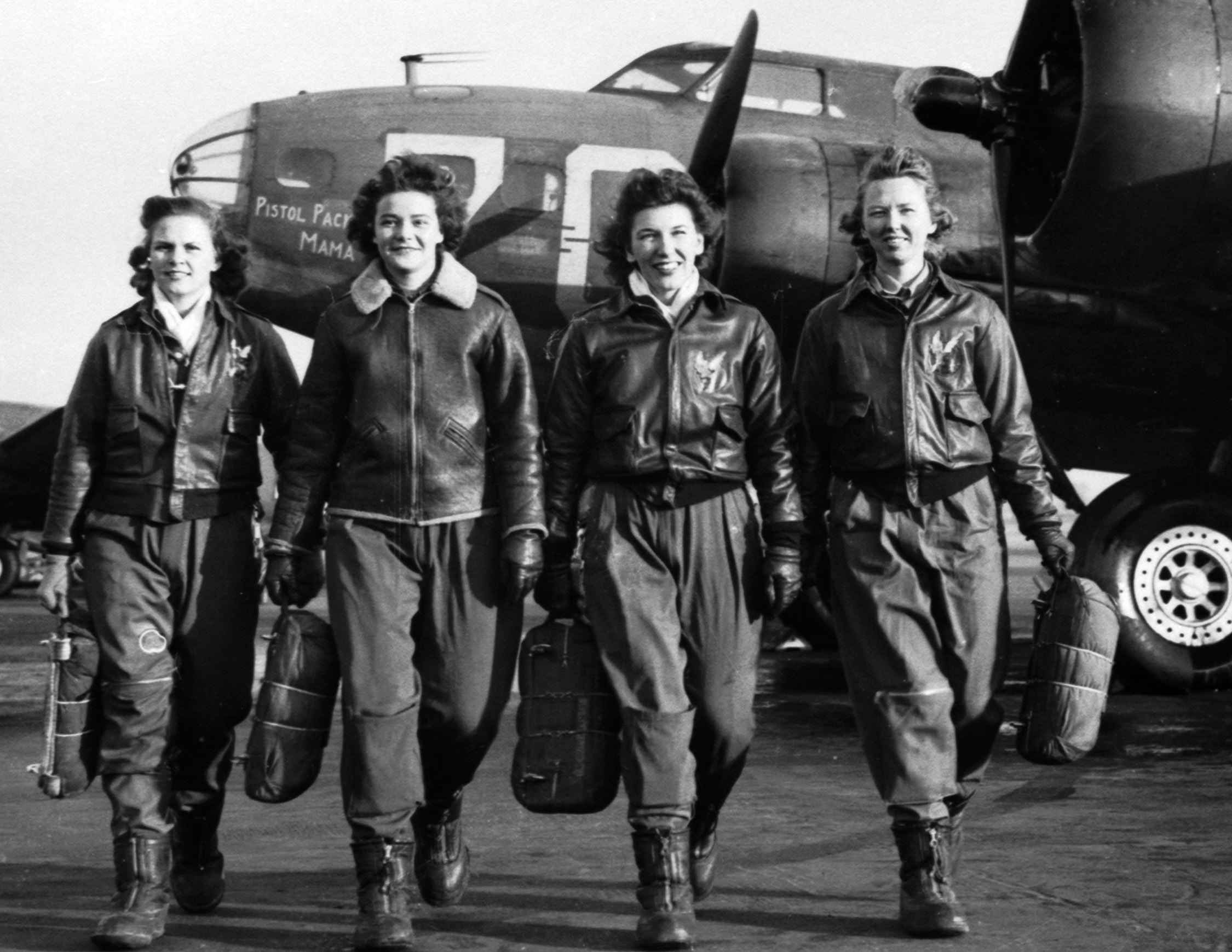 In the mid-1970s, after the conclusion of the Vietnam War, the
United States Air Force began accepting young women as pilot trainees. The
destination for the women who successfully completed undergraduate pilot
training would be primarily into the Military Airlift Command, where they would
take their place in the cockpits of military transports and light utility jets.
The women who entered the world of military airlift were following in the
footsteps of another generation, the women pilots of the Womens Auxiliary
Ferrying Service and the Womens Airforce Service Pilots of World War II.
In the mid-1970s, after the conclusion of the Vietnam War, the
United States Air Force began accepting young women as pilot trainees. The
destination for the women who successfully completed undergraduate pilot
training would be primarily into the Military Airlift Command, where they would
take their place in the cockpits of military transports and light utility jets.
The women who entered the world of military airlift were following in the
footsteps of another generation, the women pilots of the Womens Auxiliary
Ferrying Service and the Womens Airforce Service Pilots of World War II.
The possibility of using women as Army pilots had been suggested
as early as 1930, when the War Department sent a query to the Air Corps
suggesting their possible use. The proposal was promptly rejected by the Chief
of the Air Corps, who replied that the possibility was "utterly unfeasible" due
to women being "too high strung for wartime flying." Ten years later, in 1940,
the Air Corps Plans Division proposed the use of approximately 100 women pilots
as copilots in transports and for ferrying single-engine airplanes. General
Henry H. Arnold, the Chief of the Air Corps, turned down the proposal on the
basis that it was unnecessary. Still, the idea would not go away as various
proposals for the use of women in military roles were presented to the US
government from outside the Air Corps, and often from outside the military. In
1939 noted aviatrix Jacqueline Cochran wrote a letter to the wife of the
president, Mrs. Eleanor Roosevelt, suggesting the need for the planning of the
use of female fliers in a national emergency. Cochran advocated that the use of women
in auxiliary roles would free male pilots for combat duties.
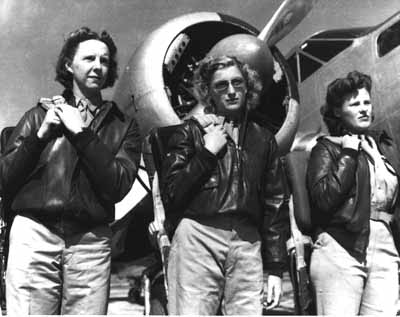 In 1940, before the United States went to war, the
Army Air Corps established the Ferrying Command, an organization
responsible for flying US-built airplanes to points where they could be
delivered to ferry pilots from the countries who were allied against
the Axis powers in Europe. Initially, the Ferrying Command depended
upon the Air Corps Combat Command combat squadrons for the pilots to
make the flights, on the basis that the long cross country flights from
the American West Coast to the East Coast and Canada provided valuable
training experience that the crews could take back with them to their
squadrons. But when Pearl Harbor plunged America into the war, the
combat pilots were needed to staff the under-strength fighter, bomber
and troop carrier squadrons which would fight the war so the Army
contracted with the national airlines and other civilian aviation companies to take over some of the ferrying
duties. In mid-1942 Ferrying Command became the Air Transport Command,
with the ferry mission placed under the Ferrying Division, commanded by
Colonel William H. Tunner. In June, 1940 the Ferrying Command had been
authorized to employ civilian pilots with significant flight
experience, but the practice was still untried when America went to
war. Right after Pearl Harbor the Army began recruiting civilian
pilots, and by the end of January, 1942 343 civilian pilots with
backgrounds in non-airline civil aviation had been assigned to ACFC's
Domestic Wing. The men, all of whom had a minimum of 500 hours of
civilian flight time, were employed on a 90-day temporary basis. If
found qualified to fly military aircraft at the end of the probationary
period, the men were offered commissions as service pilots, a
qualification somewhat lower than that required for combat pilots. The
amount of flight time required was lowered to as low as 200 hours for a
brief time, but by 1944 had been increased to 1,000 hours.
In 1940, before the United States went to war, the
Army Air Corps established the Ferrying Command, an organization
responsible for flying US-built airplanes to points where they could be
delivered to ferry pilots from the countries who were allied against
the Axis powers in Europe. Initially, the Ferrying Command depended
upon the Air Corps Combat Command combat squadrons for the pilots to
make the flights, on the basis that the long cross country flights from
the American West Coast to the East Coast and Canada provided valuable
training experience that the crews could take back with them to their
squadrons. But when Pearl Harbor plunged America into the war, the
combat pilots were needed to staff the under-strength fighter, bomber
and troop carrier squadrons which would fight the war so the Army
contracted with the national airlines and other civilian aviation companies to take over some of the ferrying
duties. In mid-1942 Ferrying Command became the Air Transport Command,
with the ferry mission placed under the Ferrying Division, commanded by
Colonel William H. Tunner. In June, 1940 the Ferrying Command had been
authorized to employ civilian pilots with significant flight
experience, but the practice was still untried when America went to
war. Right after Pearl Harbor the Army began recruiting civilian
pilots, and by the end of January, 1942 343 civilian pilots with
backgrounds in non-airline civil aviation had been assigned to ACFC's
Domestic Wing. The men, all of whom had a minimum of 500 hours of
civilian flight time, were employed on a 90-day temporary basis. If
found qualified to fly military aircraft at the end of the probationary
period, the men were offered commissions as service pilots, a
qualification somewhat lower than that required for combat pilots. The
amount of flight time required was lowered to as low as 200 hours for a
brief time, but by 1944 had been increased to 1,000 hours.
The need for civilian trained pilots was
within the Air Transport Command, and particularly within its Ferrying
Division. Mrs. Nancy Love, an experienced pilot herself, was employed
with the Ferrying Division of the ATC in a non-flying position. As the
supply of experienced male pilots dwindled, Love proposed the
recruitment of the most qualified women pilots in the nation to assist
the ATC' s Ferrying Command as civilian employees. Love's proposal was adopted in the
summer of 1942 and 25 female pilots were recruited to become members of
the WAFS, with Nancy Love as commander. Each of the women had more than
1,000 hours of flying time and they quickly proved capable of the kind
of duties for which they had been envisioned. Originally assigned to
fly single-engine light airplanes, the women demonstrated that they
could
handle fast pursuit ships as well as four-engine bombers on
transcontinental ferry flights. In July, 1944 303 women pilots
were on duty with Ferrying Division, the most ever assigned, but the numbers dropped o to an
average of 140 as women with less experience and those lacking in
competency were transferred to the Training Command for other duties as
the demand for light trainers decreased and fighters became the primary
airplanes to be delivered.
While Love's pilots were highly experienced
aviators, Jackie Cochran had another idea in mind. Using her influence
with Eleanor Roosevelt, Cochran convinced the War Department to create
the Womens Flying Training Detachment, a program to train young women
with limited flying experience as pilots, with Cochran as director of
the program. Essentially, the mission of Cochran's program was to turn
out female pilots with the experience necessary for a commercial
pilot's license. Consequently, the
military found itself with two programs using female pilots, one a
valuable asset that took advantage of the skills of experienced women
who could make a significant contribution from the outset and the other
a politically motivated program requiring extensive training before the women could be productive. General
Arnold called a meeting of officials from ATC and Cochran and told them
there was not room for two programs - they would have to get together.
Cochran's political connections allowed her to prevail and her plan was
adopted. Cochran also used her political influence to gain command of
the program. On August 5, 1943 the WAFS and WFTD were merged to become
the Women Airforce Service Pilots, or WASP, with Cochran as Director of
Women Pilots. Nancy Love was made WASP executive officer with the
Ferrying Division of the ATC. The WASP program was not a military
program but was rather an auxilary and the women had no military
status. They were civilian employees of the Army Air Forces. No
comparable program was set up to train male pilots for civilian
employment.
| Cochran and Love |
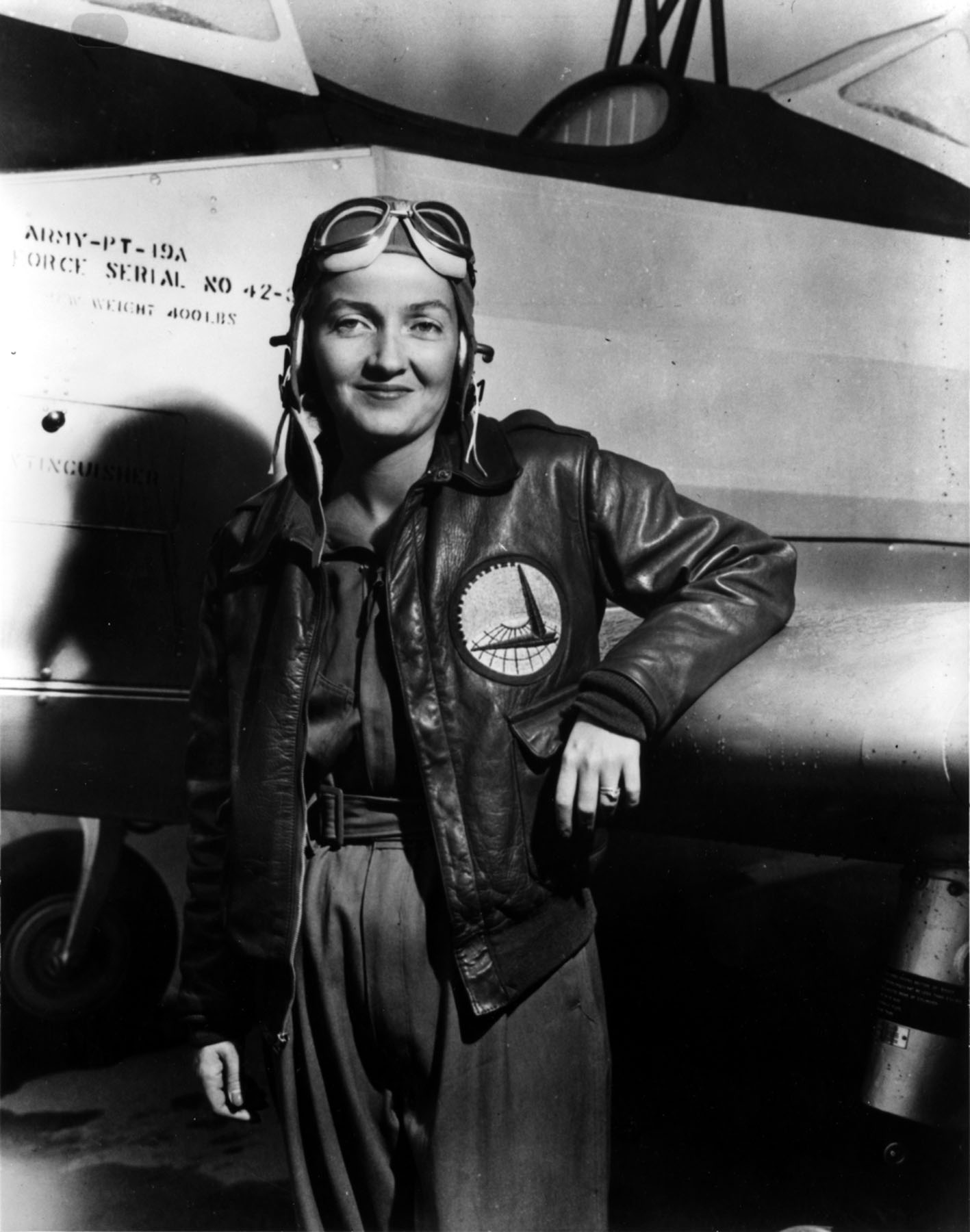 The
two principles in the establishment of the women's flying program were
Jackie Cochran and Nancy Harkness Love, two accomplished female
aviators whose lives
and personalities could not have been more different. Love grew up
in Michigan as a doctor's daughter then attended Vasser College.
She learned to fly at age sixteen and wanted to be involved in
aviation. After graduating from college she married Robert Love, who
held a commission in the Army Reserve, and the two of them opened their
own aviation business in Boston in which Nancy worked as a flight instructor
and charter pilot. She also did some work for the Department of
Commerce and was an accomplished test pilot. Before the Lend-Lease Act
was adopted, US pilots weren't allowed to make deliveries to warring
nations, including Canada. The aircraft manufacturers contracted with
US civilian pilots to fly their products to airfields on the Canadian
border, where the airplanes were towed across the border. Nancy Love
flew several flights as a contract pilot. The
two principles in the establishment of the women's flying program were
Jackie Cochran and Nancy Harkness Love, two accomplished female
aviators whose lives
and personalities could not have been more different. Love grew up
in Michigan as a doctor's daughter then attended Vasser College.
She learned to fly at age sixteen and wanted to be involved in
aviation. After graduating from college she married Robert Love, who
held a commission in the Army Reserve, and the two of them opened their
own aviation business in Boston in which Nancy worked as a flight instructor
and charter pilot. She also did some work for the Department of
Commerce and was an accomplished test pilot. Before the Lend-Lease Act
was adopted, US pilots weren't allowed to make deliveries to warring
nations, including Canada. The aircraft manufacturers contracted with
US civilian pilots to fly their products to airfields on the Canadian
border, where the airplanes were towed across the border. Nancy Love
flew several flights as a contract pilot.
Cochran was also an accomplished pilot, but her accomplishments, like
those of Amelia Earhart, had been purchased using her husband's assets
and connections. An ambitious and power-hungry woman, who could also be
called "conniving," she seemed most interested in self-promotion and power. Jackie Cochran wasn't even her real name. Her real
name was Bessie Lee Pittman and she had been raised as a sawmill
worker's daughter in Lower Alabama and the Florida Panhandle. Cochran
was the name of the young US Navy enlisted man, an aircraft mechanic,
she married as a teenager as a means of getting away from home. She
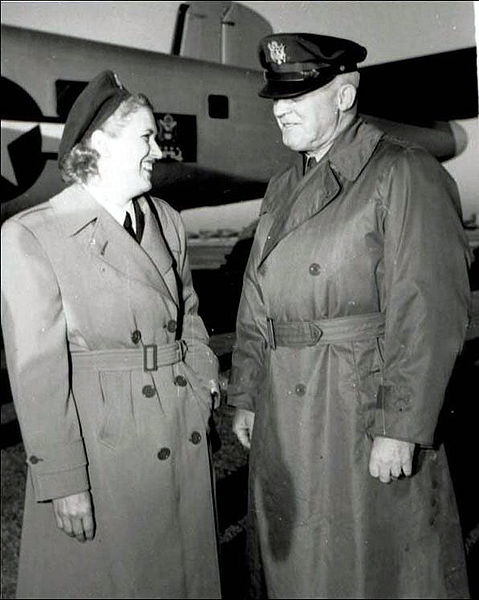 concealed her true identity for all of her life. Although some of her
relatives lived with her in California, she claimed they were employees
and her "adopted family." After her divorce, she left the South
for New York City where she used her good looks to land a job as a
countergirl at Saks Fifth Avenue. While working at Saks she met and
seduced Floyd Odlum, a wealthy financier, who was married at the time.
Odlum left his wife and married Pittman, who had kept her married name
of Cochran, but had started calling herself "Jackie." She convinced
Odlum to finance her in the cosmetics business and buy an airplane
to travel around the country. Eager to make a name for herself, she
began competing in air races. concealed her true identity for all of her life. Although some of her
relatives lived with her in California, she claimed they were employees
and her "adopted family." After her divorce, she left the South
for New York City where she used her good looks to land a job as a
countergirl at Saks Fifth Avenue. While working at Saks she met and
seduced Floyd Odlum, a wealthy financier, who was married at the time.
Odlum left his wife and married Pittman, who had kept her married name
of Cochran, but had started calling herself "Jackie." She convinced
Odlum to finance her in the cosmetics business and buy an airplane
to travel around the country. Eager to make a name for herself, she
began competing in air races.
While Love's idea was to make the most efficient use of the nation's
female pilots, Cochran wa seeking to further her own ambitions. Her
goal was to become head of a military corps of women pilots. She is
alleged to have extracted a promise from Air Corps Commander General
Henry H. Arnold that he would not utilize women in any way unless they
were commissioned as officers and that he would consult with her on any
actions involving female pilots. She went to England and joined the
British ferrying service, which employed women as well as men. When she
learned that Love had been
appointed to head a squadron staffed by female ferry pilots, she was
incensed. She left England immediately and proceeded to Washington
where she confronted Arnold in his office. Arnold pacified her by
setting up a women's training organization under her command. After a
year with two organizations, Cochran managed to gain control of all
female pilots employed directly by the Army. Nancy Love, who Cochran
evidently percieved as a threat, became her subordinate.
|
That women could supplement male pilots was apparent
in 1942-43, when the war was still going against the Allies and the War
Department believed there would be heavy casualties among the males pilots who
went to war. As some of the women demonstrated superior abilities,
General Arnold directed that training in heavier and more difficult airplanes be
initiated "to the maximum extent possible." In 1942 Arnold wrote that the Air
Force's objective was to replace as many male pilots in non-combat flying duty
with women as was feasible. Cochran's training program did not lack applicants.
Advertisements over-glamorized the program, leading to a flood of applicants as
more than 25,000 women applied for WASP training. Only 1,830 were admitted of
which 1,074 completed the training. The
training program began initially at Hughes Airport - now Houston Hobby - in Houston, Texas, but moved
to Sweetwater, Texas due to lack of facilities. In the first months of the
program, when training standards were relaxed, the wash-out rate among women was
26% but increased to 47% in 1944 when the lessened need for pilots allowed more
stringent requirements. Still, the comparison to men was favorable as the
washout rate for men went from less than 25% to more than 55% over the same
period.
|
Cornelia Fort
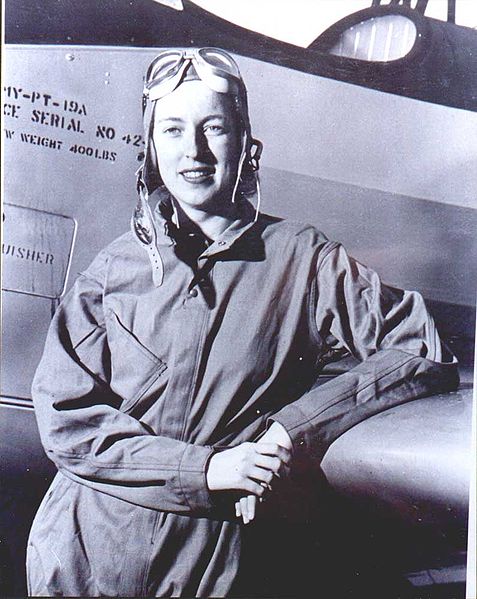 The
second woman hired for the WAFS was Cornelia Fort, a Nashville
socialite who had already become a celebrity because of where she was
on December 7, 1941. (The first hired was Betty Gilles, whose husband
was an executive with Grumman Aircraft on Long Island.) After
graduating from college, she returned to
Nashville, where she learned to fly. She moved to Hawaii and
took a job as a flight instructor at Honolulu. On the morning of
December 7, she was in the air with a student pilot when the first
Japanese aircraft appeared in the skies over Oahu. As soon as she
realized the mysterious aircraft had hostile intentions, she returned
to land. A Japanese fighter strafed the airfield immediately after she
landed and killed her boss, Bob Tyce. The
second woman hired for the WAFS was Cornelia Fort, a Nashville
socialite who had already become a celebrity because of where she was
on December 7, 1941. (The first hired was Betty Gilles, whose husband
was an executive with Grumman Aircraft on Long Island.) After
graduating from college, she returned to
Nashville, where she learned to fly. She moved to Hawaii and
took a job as a flight instructor at Honolulu. On the morning of
December 7, she was in the air with a student pilot when the first
Japanese aircraft appeared in the skies over Oahu. As soon as she
realized the mysterious aircraft had hostile intentions, she returned
to land. A Japanese fighter strafed the airfield immediately after she
landed and killed her boss, Bob Tyce.
After
the outbreak of war, civilian flying in Hawaii was suspended so
Cornelia returned to the US where she did a war bond tour and made a
movie. Nancy Love contacted her in September, 1942 and offered her a
job with the WAFS and she immediately accepted. By March, 1943 she was
flying out of Long Beach, California ferrying Vultee BT-13 and Ryan PT-19 and PT-22 trainers. On
March 21 she was flying as part of a formation of BT-13s that were on
their way to Texas. The formation was mixed, with both male and women
pilots. Women writing about the WASPS have claimed that the male pilots
started teasing her, and began making simulated combat passes at her airplane but this
assertion is not borne out by eyewitness accounts. Evidently she and
another pilot, an Army flight officer, got too close and their
airplanes collided. Both crashed and both were killed. Cornelia Fort
thus became the first female pilot to die while in Army employ.
|
Initially,
the WAFS ferry pilots were assigned
primarily to the movement of light aircraft - trainers, liaison and
light utility transports. But as they proved their competence, some
women were allowed to move into more sophisticated airplanes. Betty
Gilles was the first WAFS pilot to check out on the P-47. The
Ferrying Division had an advancement policy that started out male
pilots in light airplanes them moved them into domestic ferrying of
four-engine bombers in preparation to their assignment to overseas
ferry and transport routes or to overseas duty with the Air Transport
Command, including on the perilous routes into China. The men were
brought into the Army as commissioned officers and flight officers and
designated as Service
Pilots on the basis of their civilian flying experience. The women were
civilians and had no military status; they were awarded no military
aviation badge. (Cochran designed wings for the women and had them made, but they were not Army badges.) As Civil
Service employees, the women were not subject to
overseas duty. Consequently, as the women gained experience, they
gradually moved into the domestic ferrying of fighters which, because
they were high-performance tailwheel aircraft (except for P-38s and
P-39s), were more difficult to handle than bombers, most of which were
equipped with tricycle landing gear. By the summer of 1944 the ferrying
of fighters had become the primary WASP activity within the Air
Transport Command. The
accident rate among pilots ferrying fighters, both male and female, was
much higher than with other types although only four women were killed
in fighters. In fact, all but nine were killed in trainers. This has
led to the myth that the
women were given more difficult assignments then the men with whom they
worked, which while partly true must be taken into context. Women were
ferrying fighters, not because they were more difficult to fly, but
because they did not fit into the training program for male military
pilots who
were destined for overseas duty and who were assigned to ferry
multiengine airplanes to gain experience before being assigned to
transport squadrons. Women in the Ferrying Division
received well-deserved praise from their superiors, including General
Arnold, who stated that commanding officers preferred WASP pilots to
deliver their airplanes because the women usually reached their
destination a day or two ahead of the men. This was because men tended
to stop off to see girlfriends while the women did not carry an address
book!
A widespread myth relates that female pilots
ferried half of the high-performance combat aircraft ferried within the
Continental US. Apparently started from an article written by a former
WASP about Nancy Love, such a number as reported is impossible. More than 60,000
fighters were produced in 1943 and 1944, the two years that the women
pilots were most active, and female pilots only ferried a total of
12,650 airplanes in their entire existence. If every single airplane
ferried by women had been a fighter, they would have only accounted for
20%! In reality, the majority of airplanes ferried by women were
trainers and light liaison aircraft. There was a period in mid-1944
when female pilots probably ferried around half of the fighters being
ferried at the time, but the assertion that they ferried over half of the fighters delivered in the US is an obvious myth.
Another myth that has been perpetrated in the
hyperbole related to the WASP is that they were engaged in a hazardous
occupation. In reality, their duties were routine. Ferry
missions consisted of picking an airplane up at the factory or a
maintenance depot and flying it to its operational base, or to a
modification depot. Some women were assigned to perform "test flights,"
but they were simply acceptance flights of brand new airplanes or
airplanes that had just come out of maintenance to insure that the systems worked properly. While pilots of tow
planes were towing targets that were being shot at by inexperienced
gunners, not a single female pilot was killed while towing targets.
Twenty-six of the women who died either died while in training or died
in trainer-type aircraft in accidents that today would be characterized
as "pilot error." No women were killed in light training aircraft such
as the Piper Cub which made up a large percentage of the aircraft they ferried. WASP hyperbole often claims that women performed
missions on a wide scale when they were really single-case incidents. A
WASP who was assigned to the research and development center at Wright
Field flew a Bell P-39 jet fighter. Another was picked for a special
project to fly a B-29 (with an all-male crew including an experienced
instructor pilot) around to training bases because of the
Superfortresses bad reputation. They were both isolated cases.
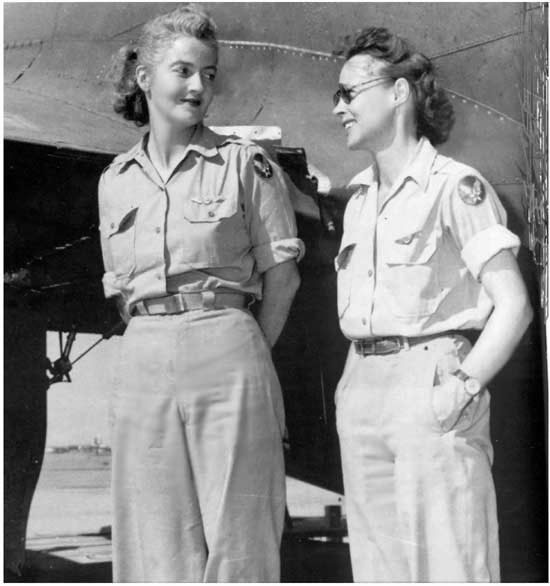 WASP
flying was exclusively within the United
States and occasionally into Canada. The director of Ferrying Division,
Brig. Gen. William H. Tunner, was impressed with the women under his
command
and sought to use them to the full extent of their abilities, including
on overseas ferry routes. In September, 1943 Nancy Love and Betty
Gilles,
two
of the most experienced female pilots assigned to ATC - Love founded
the WAFS and was director of women ferry pilots while Gilles was her
first recruit - were given a
mission to ferry a B-17 to England across the North Atlantic route. A
hand-picked crew - including Tunner's personal navigator - was
assigned to the mission to support the two women on what would have
been a history making event. The two female pilots set out from their
base at New Castle, Delaware in the B-17, expecting to take the Flying
Fortress all the way to Prestwick, Scotland. But when they got to
Newfoundland, Love and Gilles were ordered to surrender the airplane to
an all-male crew by personal order of General Arnold. Though Arnold
gave the order, just why he did so remains unclear since he had
previously given permission for the mission. Many of the former WAFS
pilots felt that Jackie Cochran put a halt to the mission because of
personal jealousy of Nancy Love's experience and notoriety within the
military. Cochran had flown her personal Lockheed Hudson to Scotland
earlier, and some women believed that she did not want to be
over-shadowed by Love. Others, those who came through Cochran's
training program, thought Arnold was afraid of the possible exposure of
the two women to interception by German fighters as they passed near
the Norweigan coast. (Such an explanation is very unlikely considering
that Norway is 500 miles east of the route from Iceland to the UK.)
Whatever the reason for the cancellation, the two
disappointed women returned to New Castle and no international ferry
flights were ever authorized for female pilots and crews.
WASP
flying was exclusively within the United
States and occasionally into Canada. The director of Ferrying Division,
Brig. Gen. William H. Tunner, was impressed with the women under his
command
and sought to use them to the full extent of their abilities, including
on overseas ferry routes. In September, 1943 Nancy Love and Betty
Gilles,
two
of the most experienced female pilots assigned to ATC - Love founded
the WAFS and was director of women ferry pilots while Gilles was her
first recruit - were given a
mission to ferry a B-17 to England across the North Atlantic route. A
hand-picked crew - including Tunner's personal navigator - was
assigned to the mission to support the two women on what would have
been a history making event. The two female pilots set out from their
base at New Castle, Delaware in the B-17, expecting to take the Flying
Fortress all the way to Prestwick, Scotland. But when they got to
Newfoundland, Love and Gilles were ordered to surrender the airplane to
an all-male crew by personal order of General Arnold. Though Arnold
gave the order, just why he did so remains unclear since he had
previously given permission for the mission. Many of the former WAFS
pilots felt that Jackie Cochran put a halt to the mission because of
personal jealousy of Nancy Love's experience and notoriety within the
military. Cochran had flown her personal Lockheed Hudson to Scotland
earlier, and some women believed that she did not want to be
over-shadowed by Love. Others, those who came through Cochran's
training program, thought Arnold was afraid of the possible exposure of
the two women to interception by German fighters as they passed near
the Norweigan coast. (Such an explanation is very unlikely considering
that Norway is 500 miles east of the route from Iceland to the UK.)
Whatever the reason for the cancellation, the two
disappointed women returned to New Castle and no international ferry
flights were ever authorized for female pilots and crews.
Undoubtedly, the glamorization of the WASP
was to a large extent responsible for their ultimate demise. The women
were civilians and thus denied the military status of
the male pilots who accepted military commissions as service
pilots. A bill was submitted in Congress in September, 1943 to
militarize the WASP but it failed to pass. Cochran and General Arnold
proposed the creation of a separate organization of female service
pilots headed by a woman with the rank of colonel, but the War
Department opposed such a move. No such organization existed for male service pilots. The USAAF felt that the women should be
commissioned in the Women Army Corps, an organization made up of women who were already members of the
military, many of whom were serving overseas in combat theaters and who
were authorized to fly in military airplanes including duty
as crewmembers. While Congress was still considering the bill, the
Civil Aeronautics Agency's War Training Service program came to an end
in January, 1944. College training programs and
civilian-contract flying schools were scheduled to close, thus freeing
large numbers of previously draft-exempt male flight instructors
for military duty. The grounding of so many well-qualified male pilots
and their possible reassignment to ground combat duties led to a
feeling of indignation against the women pilots who were seeking
military status. Simultaneously, as the war began to turn in the Allies
favor, large numbers of returning combat pilots were available for
ferrying, training and other duties then filled by WASP pilots. In
June, 1944 a Congressional committee on Civil Service matters decided
that the WASP program was unnecessary and unjustifiably expensive. The
committee recommended that the recruitment and training of
inexperienced women pilot trainees be halted but the women who were
already employed as pilots were also affected. The final class of female
pilots was allowed to graduate from Sweetwater on 20 December, 1944
but with their graduation the entire program was terminated.
In addition to their role with the Ferrying
Division, women were also used in Training Command and the domestic
numbered Air Forces. In the summer of 1943 some women were assigned to
target-towing duty training antiaircraft gunners. The women were judged
better in the mission than returning combat pilots (primarily due to
the ignorance of the women - the men had been shot at in earnest and
knew what flak was all about!) In I Troop Carrier Command some women
were assigned to fly tractors for glider practice. This was one area in
which women proved inequal to the task due to the physical strength
required to fly the Lockheed C-60s that were serving as tractors. Some
women were trained as instructors; while they were not assigned to
basic flight instruction, they served quite well in the instrument
phase of training. By the inactivation of the program, WASP pilots had
suffered 37 deaths, all to accident, while seven women received major
injuries and 29 others incurred minor injuries while on the job. One
other WASP pilot was killed in an aircraft accident while riding as a
passenger.
A footnote to the WASP story - As civilians,
the female pilots were not veterans and were thus not eligible for
benefits under the Military Readjustment Act. Of course, neither were
the civilian male pilots, including those who flew overseas flights, sometimes over hostile areas,
under military contract or with the airlines. In the 1960s as social
issues became prominent, the WASP caught the attention of feminists,
who began lobbying for veteran's status for the women. In 1977 they
were granted this status, even though none had flown overseas. It was a
status the more numerous male civilian pilots didn't even have! It wasn't until
1981 that male ferry pilots were recognized as veterans. Some airline
employees who flew overseas missions under Air Transport Command
contract weren't given veteran's status until the 1990s. The men - and
women - who worked in the civilian schools that provided primary and
other flight training have never been recognized as veterans.
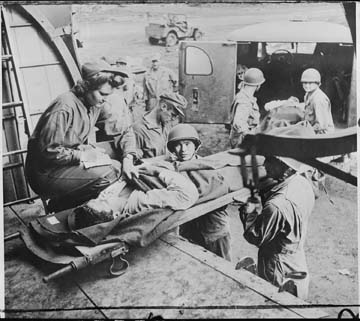 While
the WASPS were in civilian status, large
numbers of women served with the US Army Air Forces in World War II
with full military status. The one group of women who shared the same
dangers as did male aircrew members were the female flight nurses who
flew with troop carrier squadrons in all of the combat theaters. For
the first year or so of the war, no medical personnel flew on air
evacuation missions, but the need was seen and a medical evacuation
training school was set up at Bowman Field, Kentucky. By
1944 more than 6,500 nurses were on duty with the USAAF, of which 500
were on flight status in the air evacuation role. Flight nurses were
selected from nurses on duty with the USAAF hospitals, and who recieved
the recommendation of the senior flight surgeon in their command. After
passing a flight physical, the women were sent to the School of Air
Evacuation at Bowman Field, at Louisville, Kentucky for an extremely
strenuous eight-week course. During the course the women learned how to
load and off-load patients onto a transport while undergoing
military training including survival skills, the use of parachutes, and
simulated combat since the women would be required to fly into combat
areas. Upon completion of their training, the women were assigned to
air evacuation units overseas, where they flew as crewmembers aboard
troop carrier C-47s operating into forward airfields on battlefields
everywhere from New Guinea to Sicily, and later on the European
continent. The use of female flight nurses exposed women to combat
dangers that had never been experienced by American women as a group.
Several were killed and a handful were captured and became prisoners of
war. Their skill and diligence saved the lifes of hundreds of wounded
GIs who would have died on the battlefield in previous wars.
While
the WASPS were in civilian status, large
numbers of women served with the US Army Air Forces in World War II
with full military status. The one group of women who shared the same
dangers as did male aircrew members were the female flight nurses who
flew with troop carrier squadrons in all of the combat theaters. For
the first year or so of the war, no medical personnel flew on air
evacuation missions, but the need was seen and a medical evacuation
training school was set up at Bowman Field, Kentucky. By
1944 more than 6,500 nurses were on duty with the USAAF, of which 500
were on flight status in the air evacuation role. Flight nurses were
selected from nurses on duty with the USAAF hospitals, and who recieved
the recommendation of the senior flight surgeon in their command. After
passing a flight physical, the women were sent to the School of Air
Evacuation at Bowman Field, at Louisville, Kentucky for an extremely
strenuous eight-week course. During the course the women learned how to
load and off-load patients onto a transport while undergoing
military training including survival skills, the use of parachutes, and
simulated combat since the women would be required to fly into combat
areas. Upon completion of their training, the women were assigned to
air evacuation units overseas, where they flew as crewmembers aboard
troop carrier C-47s operating into forward airfields on battlefields
everywhere from New Guinea to Sicily, and later on the European
continent. The use of female flight nurses exposed women to combat
dangers that had never been experienced by American women as a group.
Several were killed and a handful were captured and became prisoners of
war. Their skill and diligence saved the lifes of hundreds of wounded
GIs who would have died on the battlefield in previous wars.
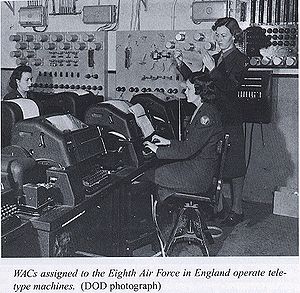 The
Air WACs were an outgrowth of the Womens Auxiliary Army Corps, which
was created in the aftermath of Pearl Harbor. Although they weren't
officially designated as Air WACs, women assigned to Army Air Forces
units were commonly referred to by that title. Originally, women in the
Army served in an auxiliary status much like the WASPS, but in 1943 the
WAAC was changed to the WAC as women were accepted into the Army with
full military status rather than as an auxilary. From the outset of the
WAAC program, the Army Air Forces was the one branch of the service
most receptive to the use of women. At first the Air Corps wanted women
to serve as aircraft warning spotters, a task at which they did
exceptionally well. Until March, 1943 the USAAF's sole WACs were
assigned to Aircraft Warning Service stations. As the war continued
WACs were assigned to as many non-combat fields as possible, including
aircraft maintenance, and in a few instances, aircrew duty on transport
aircraft where they served as flight clerks, or flight attendants.
Still, most
women served in the clerical and administrative fields in which they
had been trained in civilian life. At least 20 women were assigned to
air crew duty - probably as flight clerks on executive
transports - and there was at least one WAC crew chief during the war.
Unlike the WASP pilots, AAF WACs served overseas, not only in
civilized England, but in primitive New Guinea as well as North Africa,
India and war-torn China and Italy. The presence of WACs in the
overseas theaters led to improved discipline and courtesy among the
male personnel with which they worked shoulder-to-shoulder. The Air
Transport Command was a primary user of WACs, using women as parachute
riggers, aircraft mechanics, radio operators and cargo and passenger
processing technicians.
The
Air WACs were an outgrowth of the Womens Auxiliary Army Corps, which
was created in the aftermath of Pearl Harbor. Although they weren't
officially designated as Air WACs, women assigned to Army Air Forces
units were commonly referred to by that title. Originally, women in the
Army served in an auxiliary status much like the WASPS, but in 1943 the
WAAC was changed to the WAC as women were accepted into the Army with
full military status rather than as an auxilary. From the outset of the
WAAC program, the Army Air Forces was the one branch of the service
most receptive to the use of women. At first the Air Corps wanted women
to serve as aircraft warning spotters, a task at which they did
exceptionally well. Until March, 1943 the USAAF's sole WACs were
assigned to Aircraft Warning Service stations. As the war continued
WACs were assigned to as many non-combat fields as possible, including
aircraft maintenance, and in a few instances, aircrew duty on transport
aircraft where they served as flight clerks, or flight attendants.
Still, most
women served in the clerical and administrative fields in which they
had been trained in civilian life. At least 20 women were assigned to
air crew duty - probably as flight clerks on executive
transports - and there was at least one WAC crew chief during the war.
Unlike the WASP pilots, AAF WACs served overseas, not only in
civilized England, but in primitive New Guinea as well as North Africa,
India and war-torn China and Italy. The presence of WACs in the
overseas theaters led to improved discipline and courtesy among the
male personnel with which they worked shoulder-to-shoulder. The Air
Transport Command was a primary user of WACs, using women as parachute
riggers, aircraft mechanics, radio operators and cargo and passenger
processing technicians.
Unlike WASPs, flight nurses and WACs were destined to become a
part of the post-war Army Air Forces, and ultimately of the United States Air
Force. In a report prepared at the end of the war, General Arnold reported that
women in the jobs they were qualified to do were "more efficient" than men in
the same jobs. As for flight nurses, their devotion to duty and efficiency
established a place for them with the post-war Air Transport and Troop Carrier
Commands.
Click Table of
Contents to return.