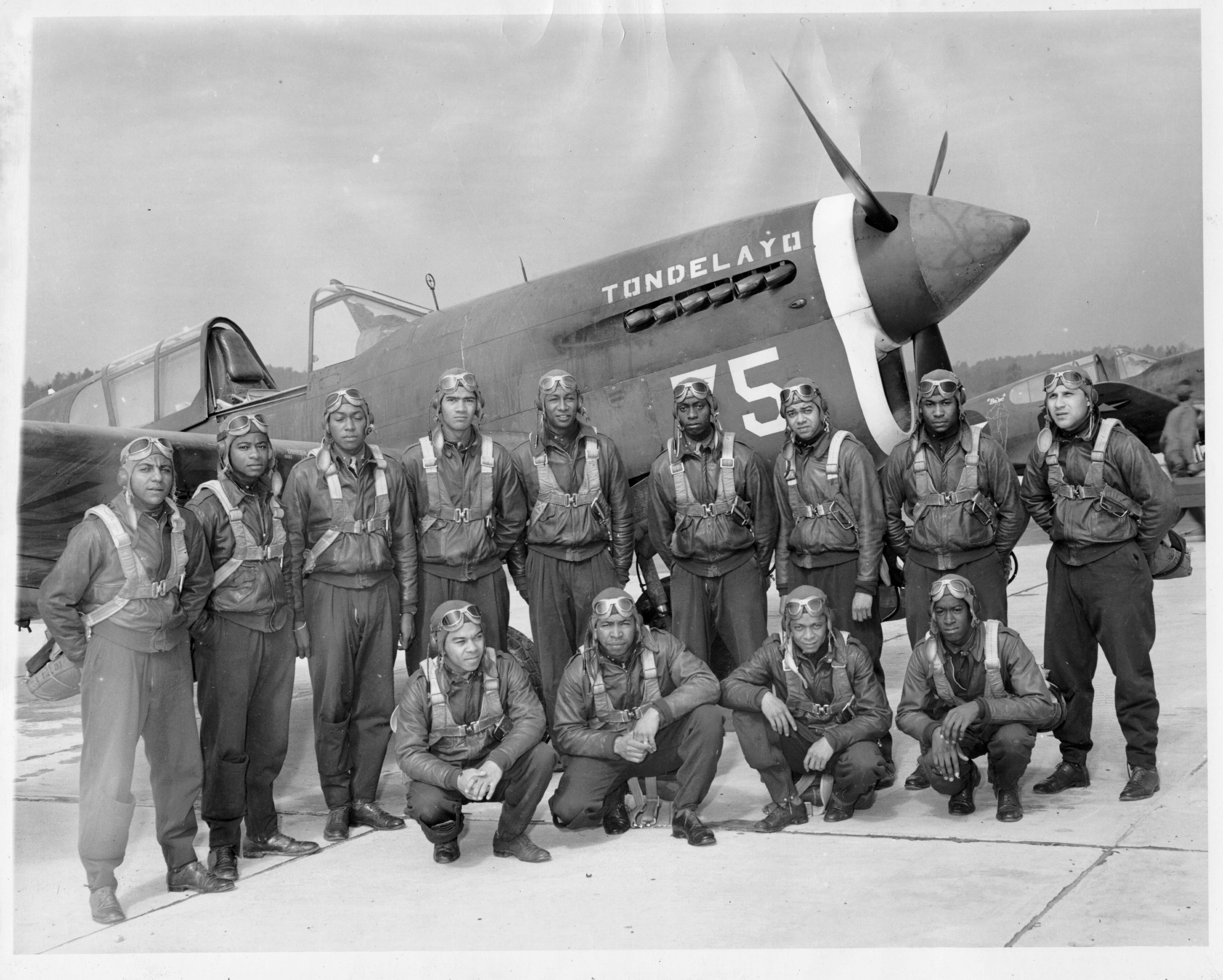
When considering the wartime role of the 99th Fighter Squadron and 332d Fighter Group, it is essential that it must be interpreted in the context of the time and the historical role rather than as an instrument of social change with the attitudes of even the 1960s, not to mention those of today. While the young black pilots who trained at Tuskegee Army Air Field and were subequently assigned to the 99th and 332nd saw combat, their effectiveness must be considered in relation to the military role they were sent overseas to fill rather than wishful thinking and hero worship. Their children and grandchildren have as much right to be proud of their accomplishments as any but to exaggerate those accomplishments as is so often done does them and their memory a great disservice.
 Ask
many Americans today about the
Tuskegee Airmen and they will tell you that they were a group of Negro
airmen who proved their critics wrong and became "one of the best"
fighter groups to fight in World War II. (The term "African-American" did not come into use until the 1980s.) Such an
assertion is
half-right; the men who were part of the 332nd Fighter Group and the
99th Fighter Squadron were Negro airmen. (American Indians, Asians and
Hispanics were not considered "colored" and served in
regular units.) As to whether
or not they
proved their critics wrong is open to debate but there is nothing to
prove the assertion that they became one of the best fighter groups to
fight in the war. In fact, the general consensus of the senior
officers under whom they served was that they were the least effective
in the theater rather than the best. Another oft-quoted remark is the assertion that
the men of the 332nd were "so good that they never lost a bomber,"
which is simply untrue. That at least some of the young colored
airmen who won their wings at the Army Flying School at Tuskegee,
Alabama became competent airmen is a fact but their record in combat
is hardly spectacular.
Ask
many Americans today about the
Tuskegee Airmen and they will tell you that they were a group of Negro
airmen who proved their critics wrong and became "one of the best"
fighter groups to fight in World War II. (The term "African-American" did not come into use until the 1980s.) Such an
assertion is
half-right; the men who were part of the 332nd Fighter Group and the
99th Fighter Squadron were Negro airmen. (American Indians, Asians and
Hispanics were not considered "colored" and served in
regular units.) As to whether
or not they
proved their critics wrong is open to debate but there is nothing to
prove the assertion that they became one of the best fighter groups to
fight in the war. In fact, the general consensus of the senior
officers under whom they served was that they were the least effective
in the theater rather than the best. Another oft-quoted remark is the assertion that
the men of the 332nd were "so good that they never lost a bomber,"
which is simply untrue. That at least some of the young colored
airmen who won their wings at the Army Flying School at Tuskegee,
Alabama became competent airmen is a fact but their record in combat
is hardly spectacular.Prior to activation of the 99th Pursuit Squadron in late 1940, there had never been a colored squadron in the US Army Air Corps or the US Army Air Service which preceded it. Colored units had existed in the United States Army since at least the War of 1812 when colored militia units from New Orleans fought in the battle at Chalmette Plantation, a battle that literally changed the course of American history. Colored regiments commanded by white officers were organized during the Civil War and continued in service afterwards - in fact, colored troops fought on both sides. The "Buffalo Soldiers" of the 9th and 10th United States Calvary were organized immediately after the Civil War, as were two regiments of colored infantry, and saw service on the frontier, particularly in West Texas, and in the Spanish-American War. Colored regiments and divisions continued in existence through World War II. However, despite pressure from civil rights activists and progressive politicians, the US Army refused to activate colored aviation units or to accept colored soldiers in existing aviation squadrons during World War I and in the years that followed. In the 1930s civil rights activists put pressure on the Roosevelt Administration to force the Army to train Negro pilots but the War Department resisted on the basis that the Air Corps was too small to have seperate facilities and the law of the land prevented integration of existing units. In a move to placate civil rights activists and the Negro press, in April 1939 Congress passed Public Law 18 which stipulated in part that aviation training would be provided at government expense to young Negroes. While the Army was trying to decide how to comply with the law, the Civil Aeronautics Administration authorized training of Negro pilots through the Civilian Pilot Training Program, a government program to provide private pilot training to students, women as well as men, at airfields in close proximity to college campuses - including Negro colleges. With the adoption of the law, the Army Air Staff realized it was going to be forced to establish colored squadrons and began making plans to do so, although it took more than eighteen months before a plan was developed and approved by the War Department. In the meantime World War II broke out in Europe and although it was still technically neutral, the US began gearing up for war.
In October 1940, in a political move designed to attract Negro votes in the upcoming presidential election, President Franklin Roosevelt announced that Negroes would be trained to become military pilots. A few weeks later, in November, the Army Air Corps notified its Southeastern Training Command to prepare to train colored pilots at a new school that was to be established near the Tuskegee Institute, a famous Negro college that had been established in the late Nineteenth Century at Tuskegee, Alabama. (Several authors have attributed the decision to accept Negro applicants to a lawsuit filed by the NAACP on the part of a Negro applicant, one Yancy Williams, but the suit wasn't filed until early 1941 and by that time the decision had already been made. Williams evidently applied for pilot training and was temporarily rejected because the Air Corps had not commenced the training program for Negro pilots as yet. The suit was withdrawn as quickly as it was filed but many Tuskegee Airmen fans and even some veterans have come to believe that it somehow influenced the Army to act. In fact, the suit was filed one day and the Army announced the activiation of the 99th Pursuit Squadron the following day, which is not enough time for the Army to have even been notified that such a suit had been filed, let alone act on it. Regardless, the Army had already begun the process to begin flight training of colored officers and cadets at Tuskegee before the suit was filed.) Civil rights leaders and the black press were incensed at the choice of a location, which lay in the heart of the segregated South. The leadership of the National Association of Colored People was not fond of the all-black school and its policies that advocated that young blacks should persevere in society through education rather than by legal action and political activism. Nor were they happy that the Army decided to establish seperate colored units; their goal was full integration of the Armed Services, starting with the Air Corps which was the smallest of the services. That the Army elected to establish a colored squadron did not fit with NAACP goals, while the choice of Tuskegee further infuriated civil rights leaders and some elements of the black media. Their opposition so infuriated Air Corps Commander Brig. Gen. Henry H. Arnold, who favored a gradual approach to integration, that he commented that it appeared that black leaders were "willing to sacrifice the whole program" if they did not have things their way.
|
Who was Yancy Williams?
According to numerous Internet articles and information
read into the Congressional Record, President Franklin Roosevelt
ordered the Air Corps to initiate US Army pilot training for Negro
pilots one day after a Howard University student named Yancy Williams
filed suit after having been turned down for Army pilot training. While
such a suit was filed by the NAACP on behalf of a Yancy Williams in
early 1941, Roosevelt had actually announced that the Army would
begin training Negro pilots four months previously in October 1940 a
few days before the presidential election in a political move to
attract Negro votes. Williams' suit was actually filed exactly one day
before the War Department announced that the 99th Pursuit Squadron had
been constituted. There was a Yancy Williams in Class 44 J-E, which
graduated on December 28, 1944 almost three years after the first
Tuskegee pilot training class graduated. He is reported as having
graduated with the rank of first lieutenant, which would indicate that
he was already an officer when he began training. Accounts relate that
Major Yancy Williams flew reconnaissance flights under President Dwight
Eisenhower. However, a Major Yancy Williams was killed in the crash of
an F-86D in 1952 before Eisenhower took office in January, 1953.
|
The Army originally attempted to follow civil rights leaders' recommendations that a training school be established close to Chicago where the civil rights movement was centered, but harsh winter Chicago weather coupled with the high cost of land on which to build a flying field caused the Air Corps to look elsewhere. The leadership at Tuskegee Institute, which had already established flight training under the Civilian Pilot Training Program, was eager to have the school located there. At a meeting held in Tuskegee of the Rosenthal Foundation attended by First Lady Eleanor Roosevelt, who was a board member, an appropriation for a loan of $100,000 to the school to build a field was approved. (It was during this visit that the First Lady was photographed in a Piper Cub with the chief instructor for the Tuskegee CPTP program in the back seat.) The new field was not a US Army facility per se, but was actually a civilian contract training school that provided basic military flight training for colored applicants. There was one difference - once they had graduated from flight training and won their wings, the new pilots would remain at Tuskegee for advanced training as pursuit pilots and their new unit would be stationed at the new military field that was being constructed nearby. The country was not at war at the time and no plans were made to send the squadron overseas. All of the colored cadets were destined to serve with the new 99th Pursuit Squadron which activated at Chanute Field, Illinois in early 1941 then transferred to Tuskegee after an initial cadre of aircraft mechanics and technicians had been trained. Chicago civil rights leaders had pushed Chanute as a training school for colored soldiers but the Army followed the advice of a number of Negro educators who felt that to bring large numbers of young Negroes into a predominently white rural area could lead to racial problems. Tuskegee was - and still is - a predominently black town in a region that is largely black populated and would be less likely to be affected socially by the establishment of a training base for colored troops. The institute dates back to shortly after the Civil War when it was established to provide higher education to the children of former slaves. An initial cadre of colored soldiers was sent to Chanute to train as aircraft mechanics and other support personnel then once they were qualified they moved to Tuskegee to train others and staff the newly activated 99th Pursuit Squadron.
The establishment of the school and squadron came to be known as "the experiment" as at least one purpose was to determine if colored aviation units would prove beneficial to the national interest. The choice of Tuskegee was initially opposed by Judge William Hastie, a black political progressive and civil rights activist who had been appointed as a special advisor to the Secretary of War on issues related to Negro troops. Hastie's goal was full integration of the Air Corps and ultimately, of all of the military, and he saw the establishment of the new squadron as a step in the wrong direction. He was further incensed at the choice of Tuskegee as he was not in tune with the school's philosophies. The NAACP and the Negro press were less than enthusiastic about the Air Corps' plans. For several months the Tuskegee trainees were generally ignored by the black press, except for sarcastic comments such as a reference to them as "Lonely Eagles" in a takeoff on Charles Lindbergh's nickname in an assertion that they would never see operational service. It wasn't until the national press published several articles relating the Negro airmen's progress that the NAACP and the Negro press began to gradually give them favorable publicity.
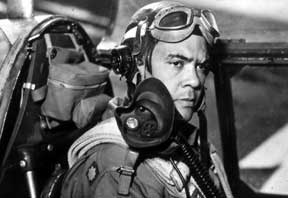
Col. Benjamin O. Davis
 To
command its first colored squadron, the Army selected Captain
Benjamin O. Davis Jr., a West Point graduate and the son of a career
Army
officer who had grown up in the military. (Contrary to popular belief, Davis was not one of the first Negro cadets to attend West Point.) Davis' father was the Army's first Negro general officer. He
became a
member of the President's Advisory Committee on Negro Troop
Policies when it was established in August, 1942. At 29 years of age,
Captain
Davis was
actually past
the maximum age for Army flight training but requirements were waived
for him
to become part of the program. Davis initially failed the flight
physical but was admitted to the program anyway due to the need for an
officer with his qualifications. He was the only commissioned officer
in the class of thirteen men who began training at Tuskegee in October,
1941. Eight cadets washed out but Davis
and four cadets completed the program and were awarded the silver wings
of US Army pilots in March 1942; the cadets recieved commissions as second lieutenants. The new officers were
immediately assigned to the 99th
Pursuit to train as fighter pilots while Davis was assigned to the base
staff. Lt. George "Spanky" Roberts, who had been a member of the first class, was placed in
command of the squadron on June 1. When the men entered flight
training
the nation was still at peace and Army plans were only for one
squadron but war broke out in December and created a need for
more
pilots and aviation personnel so the War Department
expanded its plans. Instead of one colored squadron, as the nation
mobilized for war the Army decided to establish four colored
pursuit squadrons, to organize an all-colored pursuit group and to also
establish a
medium bomber group made up entirely of colored personnel. (Some
sources have
said that plans also included a colored troop carrier group but no
mention of such a plan is made in Army publications or in most of the
information available about the colored airmen. There were
recommendations to commission Negro civilian pilots as service pilots
to serve in the Air Transport Command in Liberia but as far as is
known, no Negroes served as service pilots although some colored
civilian
pilots became liasion pilots assigned to colored infantry and artillery
units.)
To
command its first colored squadron, the Army selected Captain
Benjamin O. Davis Jr., a West Point graduate and the son of a career
Army
officer who had grown up in the military. (Contrary to popular belief, Davis was not one of the first Negro cadets to attend West Point.) Davis' father was the Army's first Negro general officer. He
became a
member of the President's Advisory Committee on Negro Troop
Policies when it was established in August, 1942. At 29 years of age,
Captain
Davis was
actually past
the maximum age for Army flight training but requirements were waived
for him
to become part of the program. Davis initially failed the flight
physical but was admitted to the program anyway due to the need for an
officer with his qualifications. He was the only commissioned officer
in the class of thirteen men who began training at Tuskegee in October,
1941. Eight cadets washed out but Davis
and four cadets completed the program and were awarded the silver wings
of US Army pilots in March 1942; the cadets recieved commissions as second lieutenants. The new officers were
immediately assigned to the 99th
Pursuit to train as fighter pilots while Davis was assigned to the base
staff. Lt. George "Spanky" Roberts, who had been a member of the first class, was placed in
command of the squadron on June 1. When the men entered flight
training
the nation was still at peace and Army plans were only for one
squadron but war broke out in December and created a need for
more
pilots and aviation personnel so the War Department
expanded its plans. Instead of one colored squadron, as the nation
mobilized for war the Army decided to establish four colored
pursuit squadrons, to organize an all-colored pursuit group and to also
establish a
medium bomber group made up entirely of colored personnel. (Some
sources have
said that plans also included a colored troop carrier group but no
mention of such a plan is made in Army publications or in most of the
information available about the colored airmen. There were
recommendations to commission Negro civilian pilots as service pilots
to serve in the Air Transport Command in Liberia but as far as is
known, no Negroes served as service pilots although some colored
civilian
pilots became liasion pilots assigned to colored infantry and artillery
units.)When the first class graduated, General Arnold immediately directed that the 99th Pursuit Squadron would become operational as soon as possible and sent overseas. The Air Staff dedicated the squadron to the Liberian Task Force, which at the time existed only on paper, a force to be made up of mostly colored units that would deploy to the African country of Liberia, a nation that had been established by Negro Americans, some of whom were freed slaves, who migrated to Africa in the 1820s. In 1942 Africa was still a contested continent and the British had yet to gain the upper hand against German and Italian forces north of the Sahara. A second squadron, the 100th Pursuit Squadron, would also be activated and deployed overseas, although no destination was as yet specified. Wartime plans were also made for an entire group with three fighter squadrons (the pursuit designation was replaced by "fighter" in early 1942) and eventually the 100th was earmarked to go to it. Immediately after winning his wings, Davis was jumped a rank and promoted to lieutenant lolonel and appointed chief of personnel for the newly established Tuskegee Air Base. Lt. George Roberts was given command of the 99th from June until August 1942 when Col. Davis assumed command. Several dates were set for the squadron to move to Liberia but the movement was delayed when it became apparent that the need for a fighter squadron there was decreasing and was eventually cancelled.
Turning the 99th into an operational squadron presented some unique problems. It was intended to be an all-colored unit and although white and Puerto Rican officers could participate in the training, once it became operational the squadron staff would be made up entirely of colored officers. While Davis was an experienced officer, his aviation experience consisted only of basic flight training while Roberts was both a new pilot and newly commissioned. The same was true of the flight leaders. Except for Davis, the 99th's officers had to gain experience as officers and aviation experience at the same time. Normally, an Air Corps or HQ Air Force squadron consisted of experienced officers brought in from other units to serve in key positions such as squadron commander, operations officer and flight leaders, but there were no other units with experienced colored pilots to draw from and the end result was an operational squadron lacking in both aviation and leadership experience. After the 100th Fighter Squadron activated, it also drew on the newly commissioned colored pilots, whose numbers were less than anticipated due to the high wash-out rate among colored cadets. (The wash-out rate at Tuskegee was more than 50%, at least in part because of the reduction in Standard Nine - commonly called "Stanine" - test selection standards for Negro cadets. While the minimum score for white cadets was 6, it was reduced to 4 for black applicants.) That all of the initial classes of new pilots were to become fighter pilots also presented problems. In the normal Army Air Corps training program, pilots were assigned based on ability, with the most aggressive and proficient pilots going to high-performance fighters while the rest went to bombers, transports or liasion aircraft. In 1942 there was nowhere for the Negro pilots to go but into fighters, except for a few slots for observation pilots with colored infantry divisions that were being trained.
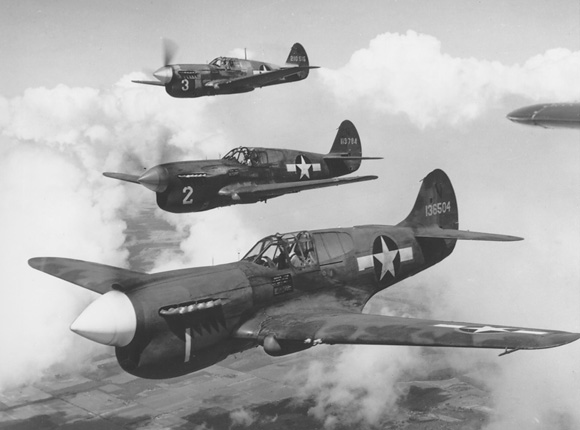
The young pilots were eager to go overseas and prove themselves in combat but their lack of experience delayed the squadron's operational date until early 1943. (The squadron was declared "ready for combat" in September 1942 but that only meant that it had reached its alloted strength and most of the men had completed their training requirements. Normally, squadrons were assigned to groups and went through a period of operational training with their group but the 99th was a seperate unit and not assigned to a group.) There was also a question as to where to send them. By the time the 99th was declared operational, Allied advances in Africa had made the assignment of a fighter squadron to Liberia unneccessary (the Liberian Task Force did deploy as planned but not in a combat role.) The 99th was considered for assignment to Gen. Claire Chennault's China Air Task Force but the Air Staff decided against that plan as the new squadron would be deploying to a harsh combat environment where there was a possibility of heavy losses which would draw adverse criticism from some quarters. By the spring of 1943 the situation in Africa had stabilized and the Allies were making plans to invade Sicily as soon as Tunisia was secure. Combat operations in North Africa had demonstrated the need for ground cooperation units and the 99th was equipped with Curtiss P-40s, which were the predominent US fighter aircraft at the time and which had proven effective in the ground attack role, although their lack of high altitude performance made them less adequate for the interceptor role. British Royal Air Force Air Vice Marshall Arthur Congingham, who commanded all Allied tactical air units in the Mediterranean, had established a policy of using P-40s and Bell P-39s to provide air cover over the Allied lines and attack ground targets while Spitfires and Lockheed P-38s provided high cover. In late March 1943 the 99th left Tuskegee and went to New York to board a ship bound for North Africa where they landed at Casablanca in early May.
 The
99th's new assignment was with the Twelfth Air Force XII Air Support
Command, commanded by Major General Edwin J. House, which was part of
the Northwest Africa Tactical Air Force that had been
organized to provide sir support for Allied ground combat units.
Equipped
with fighter/bombers, light and medium bombers, Northwest Africa Air
Support
Command was one of three combat commands reporting to Lt. General Carl
Spaatz, who was doing double duty as commander of Twelfth Air Force and
the Northwest Africa Air Forces, a joint American and British
organization. Northwest Africa Air Support Command was commanded by Air
Marshall Coningham while House served as deputy and also as commander
of XII Air Support Command. Spaatz was also the senior American air
officer
on General Dwight Eisenhower's
staff. In January a joint Allied air organization had been formed as
Northwest Africa Air Forces with Spaatz in command. The North African
campaign had just
ended and Eisenhower was preparing for the first invasion of the
European continent
which was scheduled to take place in July in Sicily. The 99th was badly
needed
for air operations in preparation for the invasion. But before the
squadron could enter combat, it had to go through an indoctrination
period with the Northwest Africa Training Command at Casablanca, a
training program that lasted approximately a month.
(Several
articles and books about the Tuskegee Airmen have claimed that the
squadron received inadequate training but the claims are not true; the
99th received as much training as other new fighter
squadrons assigned to North Africa and far more than the squadrons that
arrived with the invasion forces more than six months before.) Shortly after the squadron arrived in Casablanca the 99th recieved its
full complement of brand new P-40s, and began training under the
supervision of experienced fighter pilots in XII Training Command, one of whom was Major Philip
Cochran who had served as a squadron commander in the 33rd Fighter
Group and who would later gain fame as commander of the 1st Air
Commando
Group in Burma. Cochran would report that the 99th pilots were
good at
formation flying but that their navigational skills were lacking. Some
Tuskegee authors have claimed that he also said the 99th pilots were
"natural dive-bombers" but if this is true, he was referring to
non-combat training conditions.
Cochran
was only with the 99th during their theater indoctrination training and
was not with them in combat as he rotated back to the US about the time
that the colored airmen began operations. In early
June, their training completed, the squadron moved to Tunisia where it
was attached to the veteran 33rd Fighter Group, commanded by Colonel
William W. Momyer.
The
99th's new assignment was with the Twelfth Air Force XII Air Support
Command, commanded by Major General Edwin J. House, which was part of
the Northwest Africa Tactical Air Force that had been
organized to provide sir support for Allied ground combat units.
Equipped
with fighter/bombers, light and medium bombers, Northwest Africa Air
Support
Command was one of three combat commands reporting to Lt. General Carl
Spaatz, who was doing double duty as commander of Twelfth Air Force and
the Northwest Africa Air Forces, a joint American and British
organization. Northwest Africa Air Support Command was commanded by Air
Marshall Coningham while House served as deputy and also as commander
of XII Air Support Command. Spaatz was also the senior American air
officer
on General Dwight Eisenhower's
staff. In January a joint Allied air organization had been formed as
Northwest Africa Air Forces with Spaatz in command. The North African
campaign had just
ended and Eisenhower was preparing for the first invasion of the
European continent
which was scheduled to take place in July in Sicily. The 99th was badly
needed
for air operations in preparation for the invasion. But before the
squadron could enter combat, it had to go through an indoctrination
period with the Northwest Africa Training Command at Casablanca, a
training program that lasted approximately a month.
(Several
articles and books about the Tuskegee Airmen have claimed that the
squadron received inadequate training but the claims are not true; the
99th received as much training as other new fighter
squadrons assigned to North Africa and far more than the squadrons that
arrived with the invasion forces more than six months before.) Shortly after the squadron arrived in Casablanca the 99th recieved its
full complement of brand new P-40s, and began training under the
supervision of experienced fighter pilots in XII Training Command, one of whom was Major Philip
Cochran who had served as a squadron commander in the 33rd Fighter
Group and who would later gain fame as commander of the 1st Air
Commando
Group in Burma. Cochran would report that the 99th pilots were
good at
formation flying but that their navigational skills were lacking. Some
Tuskegee authors have claimed that he also said the 99th pilots were
"natural dive-bombers" but if this is true, he was referring to
non-combat training conditions.
Cochran
was only with the 99th during their theater indoctrination training and
was not with them in combat as he rotated back to the US about the time
that the colored airmen began operations. In early
June, their training completed, the squadron moved to Tunisia where it
was attached to the veteran 33rd Fighter Group, commanded by Colonel
William W. Momyer. Only 27 at the time, Momyer was one of the most experienced fighter group commanders in the Army, having spent time in the Middle East with the British before returning to North Africa as a fighter group commander with the invasion forces the previous November. He was also one of the most experienced P-40 pilots in the Army and had participated in the service test program at Wright Field before the first P-40s were assigned to operational squadrons. He returned to the US in March 1942 and joined the 33rd, then became the group commander in June. He landed at Casablanca with his group in November 1942. The 33rd had seen heavy combat and endured heavy losses in early 1943 in conjunction with an Allied operation into Tunisia called SATIN. The 33rd was sent to Thelepte, an airfield in western Tunisia that offered dry weather conditions and was much closer to the Allied ground forces than any of the airfields in Algeria. His group earned an Outstanding Unit Award for an action on January 15, 1942 when group pilots drove off the escorts of a German formation that had been sent to wipe out the airfield then shot down nine of the attacking bombers. Having been in combat for almost six months by the time the 99th was attached to his group, Momyer had become an expert in the support mission. An aggressive fighter pilot himself and an ace with eight confirmed kills, he had once attacked a German bomber formation single-handedly while his wingman flew cover and shot down four. Momyer expected the pilots under his command to be aggressive and he did not condone caution when it came to attacking ground targets. After the reorganization of Allied air forces in North Africa, the 33rd's mission had changed to attacking ground targets, particularly airfields, vehicles and troops.
Since the 99th was a colored unit and classified as "seperate" it was not under Momyer's direct command but was attached to his group for operational control, meaning mission scheduling. Colonel Davis reported directly to General House for administrative and disciplinary purposes. The battle for Tunisia was over but the Allies were making preparations to invade Sicily and XII Support Command had been given responsibility for neutralizing German and Italian defenses on the Mediterranean island of Pantelleria, which lay about 40 miles offshore. Momyer lost no time in putting his new charges to work. Two days after they arrived in Tunisia, squadron pilots were sent out on their first mission, a strafing attack on defense positions on Pantelleria. For the next week 99th pilots flew dive-bombing and strafing missions with other squadrons then on June 9 went out on their first mission as an intact squadron. It was also their first encounter with enemy aircraft. The mission did not go well. Instead of maintaining squadron integrity as they had been taught when they were jumped by German fighters, the rookie pilots scattered. Another squadron had to pick up the escort of the A-20s the 99th was supposed to be protecting. Fortunately, none of the 99th pilots were lost but they had not made a good impression on the other squadrons. Momyer began having second thoughts about the seperate squadron.
| Some authors in writing about
the
Tuskegee Airmen have
disparaged Momyer, claiming that he had been reckless in early
operations because he took his group too close to German lines. In
reality, Momyer's 33rd Group gave up 25 of it's replacement P-40s to a
new French fighter squadron which organized as the Lafayette
Escadrille and was left short of airplanes. In January 1943, less than
two months after the US
landings at Casablanca, XII Support Command moved Momyer's 33rd Fighter Group into a
forward field at Thelepte in central Tunisa which placed the group in
a position to better support the advancing Allied forces and to reduce
fighter range for missions escorting bombers. A 33rd squadron, the 58th
Fighter Squadron, began operations from Thelepte in early
December immediately after the field was captured under the command of
Maj. Cochran - their operations so close to the lines were referred to
as "guerrilla air warfare." The rest of the group joined them in early January. The group was soon
recognized as the most valuable fighter group in the region. A shortage
of fighters developed in North Africa, particularly P-40s. While P-38s
could be brought down from England, P-40s had to be brought from the
US. Because it was engaged in heavy combat, Momyer's 33rd Group
suffered heavy losses, both combat and operational, losses that could not be replaced. Contrary to
assertions, it was not the only group operating that far forward. There
were two squadrons of P-39s, two squadrons of DB-7 and A-20 light
bombers and the French Lafayette Escadrille all operating from the
advanced field at Thelepte where they were under constant attack by German aircraft. By
February 2 the 33rd was down to only thirteen operational P-40s. On
February 6 Momyer's group was relieved by the 31st Fighter Group, which
flew Spitfires, and moved back to Algeria to rest and re-equip. After
re-equipping, the 33rd
returned to combat a month later and continued adding to its record. The group was
credited with the destruction of 34 enemy airplanes in one week. Momyer
was
actually one of the Army's most thought-of young officers. In October
1943 he returned to the United States and was assigned to the Army Air
Forces Board
where he became responsible for developing fighter/bomber tactics. In
the
US Air Force that came into existence in 1947, he served as a fighter
commander and in the Pentagon, where he was the project officer for the
development of Lockheed's C-130 Hercules. In 1966 as a lieutenant
general he was sent to Saigon to command Seventh Air Force, a role he
filled until 1968. After his return to the US, he was given command of
the Air Force's Tactical Air Command and promoted to four stars. He was
a no-nonsense officer who
was more than willing to accept casualties when the need arose and
expected his men to be aggressive, but he was far from reckless. As the
senior USAF officer in Southeast Asia, his goal was to support the
ground forces but he was not willing to place his pilots and aircrews in
extreme danger to attack targets with little military value. Because of the negative report he wrote on the 99th Fighter Squadron, Momyer is implied to have been racially prejudiced as some officers were. Actually, although he had spent his childhood in Oklahoma, Momyer spent his teen years and went to college in the Northwest, in Seattle, Washington. Accusations of racism directed at Momyer come from officers (Colonels Chuck Yeager and Harry "Heinie" Aderholt) who ran afoul of him while subordinate to him in Southeast Asia and resurrected the rumors about his experience with the 99th in order to divert attention from their own issues. |
Pantelleria surrendered without an invasion on June 11, less than two weeks after the 99th arrived in Tunisia and XII Support Command turned its attention toward Sicily, and only two days after the 99th's first mission as a squadron. The 33rd Fighter Group moved to Pantelleria but the 99th remained on Tunisia and was attached to the 324th Fighter Group, a Ninth Air Force group that had moved to Tunisia to serve as an operational training unit for newly arrived replacement pilots and squadrons. While with the 324th, the squadron flew escort and attack missions over Sicily and Italian targets and provided air cover over Pantelleria. It was on one of the air cover missions that a 99th formation did something that did not endure them to the officers under whom they were serving. When a formation of German bombers escorted by fighters was detected on the way to attack US positions the squadron was supposed to be protecting, instead of disregarding the fighters and attacking the bombers as their mission called for, the 99th pilots went after the fighters and allowed the bombers to continue unmolested to their targets where their bombs did considerable damage. The incident also did considerable damage to the squadron's reputation. On July 2 Lieutenant Charles Hall claimed the squadron's first aerial victory while on a bomber escort mission to Castlevetrano, Italy. Word of the victory was announced to the press and Hall was personally congratulated by several high-ranking officers. His victory was the only enemy aircraft credited to a 99th pilot for six months. The squadron suffered its first combat casualties the same day when two pilots were shot down. As an attached unit of the 324th, the 99th shared in the award of an Outstanding Unit Citation that was presented to the group for operations up to and including the Sicily Invasion.
Shortly after the invasion of Sicily, the 324th Group stood down from combat and the 99th returned to operational control of the 33rd. In late July the 99th moved to Licata, Sicily where it shared the base with the 33rd's 58th Fighter Squadron. The two squadrons were primarily involved in bombing and strafing missions in support of ground forces fighting on Sicily and southern Italy. At the time, the Germans were holding their air forces in reserve and opportunities for air-to-air combat over Sicily and southern Italy were limited. After all, the mission of XII Support Command was to provide air support for ground units and maintain air superiority over the battlefield, not to go out looking for enemy aircraft. Tuskegee Airmen fans often point to the assignment as somehow demeaning but in reality by the time the 99th arrived in North Africa, support of ground units was becoming the primary mission of air forces in the theater.
In late August, a few weeks after the squadron arrived in Sicily, Lt. Col. Davis was relieved of command so he could return to the United States to take command of the 332nd Fighter Group, which had activated at Tuskegee several months earlier then moved to Selfridge Field, Michigan near Detroit. He was replaced by George "Spanky" Roberts, who had been promoted to major. When he arrived back in the US, Davis appeared at a press conference accompanied by his father and Truman Gibson, who had replaced Judge Hastie as the War Department Advisor on Negro Troops after Hastie resigned his position in protest. Colonel Davis claimed that his men had proven themselves in combat, and that they had proven "the experiment" a success. TIME magazine ran an article entitled "Experiment Proved" in which it reported Davis' views, but also reported that the squadron's reputation in the theater was not great and that Twelfth Air Force was considering reassigning the 99th to Coastal Air Command for convoy escort and coastal patrol duty. The report was true. Both Colonel Momyer and General House as well as General Spaatz had written reports on the 99th's performance that were less than complimentary. Col. Momyer's report related that while the 99th's performance and discipline on the ground was excellent, the same could not be said for it's performance in combat. Momyer mentioned the incident over Pantelleria and also brought up a mission over Italy on which the squadron had turned back due to weather when the rest of the group's fighters went on to the target and attacked. (Although it is unclear if he was referring to it or not, the 33rd flew a mission during this period in which it took the heaviest casualties it had taken since North Africa.) The report mentioned that Col. Davis had asked for a 48-hour stand-down during the Battle of Sicily at a time when his pilots had only averaged 28 sorties per man while the other squadrons had over 70 and continued to fly. (A sortie was one takeoff and landing, and in Sicily they were often of short duration as the airfields were only a few miles from the front lines. A pilot might fly several sorties each day.) Davis would later claim that he had not recieved any replacements at the time but in reality the 99th had started recieving replacements several days previously before it departed Tunisia for Sicily when three new pilots came in - the squadron had only lost two pilots at that point. Momyer made no comment about the 99th's lack of success in the air combat role even though Davis later claimed that squadron pilots had encountered enemy aircraft on 80% of their sorties. Although the squadron was attached to Momyer's group, General House had direct command of the 99th and had observed them closely. His report was very similar to Momyer's and when his report and another by Spaatz reached General Arnold's desk in Washington, the AAF chief considered cancelling the entire Negro pilot program. In response to the reports, some members of the President's Committee on Negro Troop Policies met in Washington with Col. Davis, who defended his men's performance. The Committee concluded that the 99th had only been in combat a short time and it was too soon to make a recommendation, so they basically decided to do nothing. (Although popular lore holds that the Negro pilot program was saved by political intervention, the US Army history of Negro combat units in World War II makes no mention of such an intervention. The Wikipedia article on the Tuskegee Airmen claims there was a hearing by the House Armed Services Committee but no such hearing is mentioned in the Army history. Some accounts relate that Arnold put the matter to President Roosevelt and was told not to remove the squadron from combat.)
Was Col. Momyer's report racist, as 332nd fans assert? A reading of the report does not support such an assertion. In general, the young colonel praised the men of the 99th and their squadron commander, Lt. Col. Davis for their military bearing and discipline. The criticisms were solely of the squadron's performance in combat. Momyer was writing as a practical realist reporting the situation as it existed and did not take into account possible reasons for the squadron's lackluster performance. Because it was an all-colored squadron and had only been operational for a short time before moving overseas, the 99th, particularly its leaders, was grossly lacking in both military and operational experience. It was General House who decided that the 99th would be best utilized in the coastal patrol role, an important mission of protecting Allied shipping on the Mediterranean.
Apologists for the 99th have claimed that the squadron was based "hundreds of miles" from the lines and was thus unable to engage enemy aircraft. Those who make such claims have either never researched the actual bases from which the squadron operated or have ignored the facts. It's first base was in Tunisia, from which it flew missions first in support of the campaign against Pantelleria then against targets in Sicily and southern Italy, which were just across the Mediterranean. It continued operating out of Tunisia on missions providing air cover of Pantelleria, which is only forty miles from the Tunisian coast, and against targets in Sicily in preparation for the invasion. The squadron's base at Fardjouna (now Farjouna) in Tunisia was roughly 100 miles, less than half an hour's flying time, from the invasion beaches on Sicily. It was on an escort mission to Italy that a squadron pilot claimed the squadron's first confirmed enemy aircraft and the squadron suffered its first losses. On July 28 the squadron moved to Licata Airfield on Sicily, where it was based with the 33rd's 58th Fighter Squadron and flew missions in support of British and US troops fighting on the island. In short, the assertion that the squadron was based "hundreds of miles from the front lines" is false. On September 4, 1943 the 99th moved to an airfield at Termini near Palermo, to bring it closer to the Allied landing beaches at Salerno and Taranto. Two weeks later on September 17 the squadron transferred to Barcelona, an airstrip on the very point of Sicily near Messina only a few miles from Italy. Advance parties from the 99th landed near Salerno so it was evident that original plans had called for the squadron to move up with the 33rd Group. Considering that General House's letter is dated September 17, it is likely that it was prompted by a letter from Col. Momyer outlining his reasons for NOT bringing the squadron to Italy. (99th pilots did, in fact, operate from advance fields in Southern Italy, but on a temporary basis and the headquarters remained on Sicily.) Momyer was also coming up on his rotation back to the US and may not have wanted to saddle his successor with a squadron in which he had lost confidence. As it turned out, the squadron was reassigned. In mid-October the 99th was attached to the 79th Fighter Group and moved to the Foggia region in Italy. It would remain with the 79th until after the first of the year, when it was again attached to the 324th Group. If engaging enemy aircraft had been a concern of the 99th's critics, they would have said so in their reports. After all, Lt. Col. Davis himself reported after he returned to the US that his men saw enemy aircraft on "80% of the missions they flew." Some 99th veterans have claimed that Momyer waited until his men started racking up kills over Italy before he wrote his letter. In fact, Momyer's men had been racking up kills all along. In March, right after the 99th left Tuskegee, 33rd pilots shot down 34 German and Italian aircaft IN ONE WEEK!!! Momyer did not have to justify his group's pilots to anyone - they had already made an impressive mark.
In his rebuttal to the Momyer report when he appeared before the Committe on Negro Troop Policies, Col. Davis claimed that the squadron was under-strength. In fact, when the 99th moved to Sicily it was at full strength. At that point the 99th had lost two pilots, but three replacements arrived in Tunisia five days before the squadron headquarters moved to Licata. The squadron lost it's third pilot on August 11. Six more replacements arrived on August 24, which means that the 99th was never under-strength. The 99th suffered it's fourth casualty on September 17. (The loss was actually the squadron's third combat loss. A pilot had been killed in a mid-air collision with another squadron P-40 a few weeks before.) By that time Col. Davis had been gone from the theater for more than two weeks.
As it turned out, the 99th and 332nd were saved by the tempo of the war coupled with improved performance on the part of the all-black fighter squadron itself as its pilots gained more experience. The air war in Europe had shown the need for escort fighters to escort bombers on deep penetration missions into enemy airspace while ground support with fighter/bombers had risen to become the major Air Force mission. Every possible fighter and fighter pilot was needed in England as the air campaign increased in intensity in preparation for the invasion of France. A reorganization of Europe-based air forces led to the establishment of Fifteenth Air Force as a heavy bomber component operating from Italian bases and the creation of two tactical air forces, one of which was Twelfth, which would be responsible for supporting the ground war in Italy. Fighter strength in the Mediterranean was reduced by the transfer in early February of two experienced groups from the XII Air Support Command, one of which was the 33rd, to India then on to China to provide fighter protection for the new bases that were under construction for B-29 operations. Ninth Air Force headquarters transferred to England to become a tactical air force and its fighter groups transferred to Fifteenth, but no new groups from the United States were forthcoming as they were all slated to go to the UK and the Eighth and Ninth Air Forces. Only one group had yet to be identified for assignment to a particular theater - the 332nd. The 332nd had activated at Tuskegee in October, 1942 and moved to Selfridge Field, Michigan in March, 1943. The 100th Fighter Squadron became part of the 332nd, along with the 301st and 302nd. At Selfridge the group trained under the supervision of veteran fighter pilots such as Dick Suehr, an ace who had flown P-40s, P-39s and P-38s in the Southwest Pacific at the beginning of the Pacific War. After working with the 332nd, Suehr was assigned to train the first group of Negro B-25 pilots. (Suehr soon became disenchanted with Stateside training duty and volunteered to go back to combat, even though he was a newlywed.)The 332nd pilots flew P-40s, P-39s and P-47s but the group had equipped with P-39s by Decembe 1943 when General Spaatz requested that it be sent overseas to Italy where fighter squadrons were in short supply - and would be in shorter supply when the two groups that had been identified to move to China earlier in the year left after the Anzio landings. The group initially was sent overseas to join Twelfth Air Force for the ground support and coastal patrol role, but in late January the 99th was involved in operations that led directly to the assignment of the 332nd to fighter escort duty.
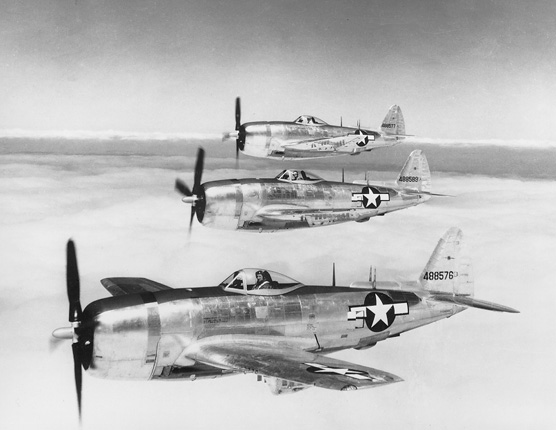
The previous October the 99th was attached to the 79th Fighter Group. In early January the 79th moved from southern Italy to new bases further north where it would be able to cover the landings at Anzio. Although the Luftwaffe had made few appearances in the south of Italy, it came out in full force against the Anzio landings. On January 27th while the 332nd was still enroute to Italy, 79th fighters encountered German fighters over Anzio and 99th pilots claimed ten, with three more the following day. The victories were widely reported in newspapers in the United States, and the senior air leadership in the theater looked at the 99th in a different light. (The 79th Group and the 99th Squadron were not the only units to rack up kills over Anzio that day. The 33rd Fighter Group was in its last action prior to leaving for the China-Burma-India theater and was heavily involved in the battle. It's pilots were credited with seven kills on January 27.) The squadron had a poor reputation for its performance in the ground attack role but its success over Anzio gave rise to the view that the Negro pilots might be better suited for the air-to-air combat role. Mediterranean air commander Gen. Ira Eaker recommended that the 332nd, to which the 99th had been assigned on paper, be assigned to bomber escort duty once they had gained some experience in the theater. Such an assignment could not take place until the group had achieved some operational experience under combat conditions. The 332nd was initially assigned to XII Fighter Command where it was assigned to duty escorting convoys and on coastal patrol in P-39s, but Generals Spaatz, Eaker and Nathan Twining, who commanded Fifteenth Air Force, decided to transfer the group to Fifteenth and equip it with P-51s when they became available. In the interim, the group would equip with Republic P-47 Thunderbolts which were replacing P-39s in the ground attack role and were being used as escorts until enough P-51s had arrived to replace them in Fifteenth. With only six groups assigned, Fifteenth was short on fighter squadrons and the 332nd's three squadrons coupled with the 99th would provide four additional fighter squadrons for escort duty. The Air Staff had planned to replace the group's P-39s with the new Bell P-63 Kingcobra but the program ran into production delays. The escort role offered a new possibility for the colored group. The P-39s and P-40s were being phased out as P-47s became the primary fighter/bomber in the theater and new P-51 Mustangs, which had just made their combat debut with Ninth Air Force in England, were expected to arrive in Italy soon. In his recommendation to reassign the group, General Eaker voiced his view that the 99th's performance over Anzio demonstrated that the black airmen were more suited to air combat, an assessment that General House agreed with. The group was temporarily re-equipped with P-47s, with which it had been equipped for a time at Selfridge, and transferred to Fifteenth Air Force in early June. Col. Davis chose red tails as the group's identity marking and the men started referring to themselves as The Red Tails. The P-47 assignment only lasted for about a month.
The presence of the 332nd in Italy did not set well with the men of the 99th Fighter Squadron. Having become an accomplished squadron, they were happy operating alongside the white fighter squadrons with whom they had been flying. Squadron morale had improved markedly after the victories over Anzio. The squadron had shared in another Outstanding Unit Citation that was presented to the 324th Fighter Group, to which the 99th had been attached a second time, for operations during the Battle of Cassino. Still, with an all-colored fighter group now in the theater, they saw the handwriting on the wall and expected to be reassigned to the 332nd - and they were not looking forward to the reassignment. They knew that the squadron would be broken up and the men reassigned among the other three squadrons since they were experienced combat pilots and the pilots in the three new squadrons were not. Furthermore, after several months in combat fighting alongside white units, they felt that they had been accepted and were comfortable working with the other groups. In fact, the squadron had already been assigned on paper to the 332nd but had continued as an attached unit with the 324th until it was reattached to an air support group for a short time. The 99th's P-40s were replaced with P-47s and when the 332nd began requipping with Thunderbolts as well, it became apparent that the units would be combined. As it turned out, the 99th was assigned to the 332nd on paper several months before it officially transferred to join the group in July 1944.
 In
June the 332nd began flying escort missions. For the first few weeks
they flew P-47s, but in early July the group equipped with P-51s. A
popular myth arose
and has been accepted as fact
that the 332nd pilots "were so good that they never lost a bomber" but
it is just that, a myth. In
reality, they lost at least 25 bombers that were under their protection
if attributing bomber losses to the
fighter groups that escorted them is fair. Nowhere in Army Air Forces
records are bomber losses attributed to any specific fighter group; the
332nd claim was made years after the war by certain authors of articles
and books about the unique fighter group. Impetus for the claim
evidently came from an article that appeared during the war
claiming the group hadn't lost any bombers in 100 missions. (The
claim
was no doubt true when placed in proper context - there was a period of
about six months in which
332nd pilots encountered few enemy aircraft and in which few bombers
were lost to fighters. They had, however, lost a
number of bombers that were under their escort during their first few
months of operations when enemy opposition was still strong and would
lose more when German fighter activity picked up during the final
months of the war.) The group's first escort
mission was to
Munich on June 9 and there were losses among the bombers. Group pilots
claimed five German fighters but two bombers were lost. The June 25 mission was notable in that a
flight strafed an enemy vessel and reported a sinking. The young
pilots, who had only been in the theater since March and whose
combat experience was minimal, reported that the ship was
a destroyer but there is considerable controversy over the attack as no
German destroyers were reported lost that day. It possibly was a former
Italian
gunboat that ran aground while being strafed. That the young pilots
misidentified the ship and possibly claimed a ship that was not sunk is
no reflection on their competence - it was quite common for airmen to
misidentify ships while dozens, perhaps hundreds, of claims of ships
being sunk were made that were not supported by examination of German
(and Japanese) records after the war. On June 30 five bombers
were reported lost on a mission on which the 332nd flew escort but
it's believed that the group had already left the formation before
the
attack occurred. On July 8 an estimated 15-20 German fighters attacked
the bomber formations and shot down two B-24s. The Red Tails did not
shoot down a single enemy fighter. Four days later on July 12
the Red Tails were credited with four enemy fighters but three bombers
were lost. On July 18 the Red Tails had their best day, at least in
terms of the number of enemy aircraft claimed, but in terms of bomber
losses it was also their worst and was also one of the worst days for Fifteenth Air Force bombers. Group pilots were
credited with twelve enemy planes shot down but the cost was high. Three
Red Tail fighters were lost and FIFTEEN B-17s
went down to fighter
attack during the battle! Two days later 332nd pilots claimed four more
fighters but two
bombers were lost to fighters. By this time the 332nd had equipped with North
American P-51 Mustangs and the 99th FS had joined the group at its
base at Ramitelli. The group had proved to be an effective
fighter group but it was not the highly qualified group that Tuskegee
Airmen fans claim, a group so good that the bomber groups requested it
as escort and that "never lost a bomber." The 332nd had actually "lost"
more than twenty bombers to enemy fighter attack during it's first two months of escort
operations. (In fact, bomber groups
had no say in which fighter groups were assigned to escort duty.
Furthermore, the ratio of bomber to fighter groups in Fifteenth Air
Force was more than two to one.) Bomber losses declined after that, but it was hardly due to the
effectiveness of the 332nd as an escort group.
In
June the 332nd began flying escort missions. For the first few weeks
they flew P-47s, but in early July the group equipped with P-51s. A
popular myth arose
and has been accepted as fact
that the 332nd pilots "were so good that they never lost a bomber" but
it is just that, a myth. In
reality, they lost at least 25 bombers that were under their protection
if attributing bomber losses to the
fighter groups that escorted them is fair. Nowhere in Army Air Forces
records are bomber losses attributed to any specific fighter group; the
332nd claim was made years after the war by certain authors of articles
and books about the unique fighter group. Impetus for the claim
evidently came from an article that appeared during the war
claiming the group hadn't lost any bombers in 100 missions. (The
claim
was no doubt true when placed in proper context - there was a period of
about six months in which
332nd pilots encountered few enemy aircraft and in which few bombers
were lost to fighters. They had, however, lost a
number of bombers that were under their escort during their first few
months of operations when enemy opposition was still strong and would
lose more when German fighter activity picked up during the final
months of the war.) The group's first escort
mission was to
Munich on June 9 and there were losses among the bombers. Group pilots
claimed five German fighters but two bombers were lost. The June 25 mission was notable in that a
flight strafed an enemy vessel and reported a sinking. The young
pilots, who had only been in the theater since March and whose
combat experience was minimal, reported that the ship was
a destroyer but there is considerable controversy over the attack as no
German destroyers were reported lost that day. It possibly was a former
Italian
gunboat that ran aground while being strafed. That the young pilots
misidentified the ship and possibly claimed a ship that was not sunk is
no reflection on their competence - it was quite common for airmen to
misidentify ships while dozens, perhaps hundreds, of claims of ships
being sunk were made that were not supported by examination of German
(and Japanese) records after the war. On June 30 five bombers
were reported lost on a mission on which the 332nd flew escort but
it's believed that the group had already left the formation before
the
attack occurred. On July 8 an estimated 15-20 German fighters attacked
the bomber formations and shot down two B-24s. The Red Tails did not
shoot down a single enemy fighter. Four days later on July 12
the Red Tails were credited with four enemy fighters but three bombers
were lost. On July 18 the Red Tails had their best day, at least in
terms of the number of enemy aircraft claimed, but in terms of bomber
losses it was also their worst and was also one of the worst days for Fifteenth Air Force bombers. Group pilots were
credited with twelve enemy planes shot down but the cost was high. Three
Red Tail fighters were lost and FIFTEEN B-17s
went down to fighter
attack during the battle! Two days later 332nd pilots claimed four more
fighters but two
bombers were lost to fighters. By this time the 332nd had equipped with North
American P-51 Mustangs and the 99th FS had joined the group at its
base at Ramitelli. The group had proved to be an effective
fighter group but it was not the highly qualified group that Tuskegee
Airmen fans claim, a group so good that the bomber groups requested it
as escort and that "never lost a bomber." The 332nd had actually "lost"
more than twenty bombers to enemy fighter attack during it's first two months of escort
operations. (In fact, bomber groups
had no say in which fighter groups were assigned to escort duty.
Furthermore, the ratio of bomber to fighter groups in Fifteenth Air
Force was more than two to one.) Bomber losses declined after that, but it was hardly due to the
effectiveness of the 332nd as an escort group.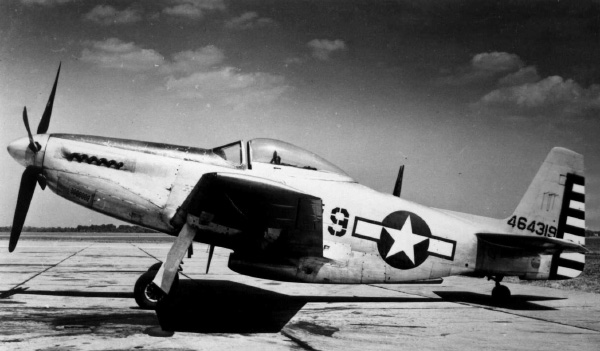 August 1944 saw a general overall decline in bomber losses to fighter attack that continued for the rest of the war.
In fact, for the remainder of the war, encounters with enemy aircraft became fewer and further
between. The mission record for the 332nd reveals
that of the 311 missions the group flew, group pilots only encountered enemy
aircraft on
31 (10%) of them. From October 11 to March 16 only one 332nd pilot was
credited with an enemy aircraft - and from December 9, 1944 to March
14, 1945 group pilots DID NOT EVEN SEE A SINGLE ENEMY PLANE!!! It was
only during the final few weeks of the war that 332nd pilots once again
encountered German fighters. There is an explanation for this. Shortly
after the 332nd entered the escort role, Soviet troops overran the oil
fields at Ploesti, Romania and the supply of gasoline to the Luftwaffe
became severely restricted. Little fuel was available for training and
the operational squadrons hoarded what fuel they had and only sent
their
fighters up when particular targets were threatened. Those targets
were mostly around the Berlin area which was well north of Fifteenth
Air Force's area of operations in northern Italy, the
Balkans and southern Germany. Northern Germany - including Berlin
- was Eighth Air Force's responsibility. Furthermore, the 332nd was evidently not
fully
integrated into Fifteenth Air Force fighter operations. Fifteenth
included two fighter wings, the 305th and 306th, which were
combined into XV Fighter Command late in the war. The 305th Fighter
Wing was made up of three groups that flew Lockheed P-38s and the 306th
initially included three groups equipped with P-47s until it was joined
by the 332nd Fighter Group. By July 1944 the 306th wing was equipped
exclusively with North American P-51 Mustangs. Commanded by Brigadier
General Dean Strother, who had previously served in the Pacific, the
306th included a fourth group - the 332nd - made up of four squadrons
instead of the
standard three squadrons normally assigned to a fighter group.
August 1944 saw a general overall decline in bomber losses to fighter attack that continued for the rest of the war.
In fact, for the remainder of the war, encounters with enemy aircraft became fewer and further
between. The mission record for the 332nd reveals
that of the 311 missions the group flew, group pilots only encountered enemy
aircraft on
31 (10%) of them. From October 11 to March 16 only one 332nd pilot was
credited with an enemy aircraft - and from December 9, 1944 to March
14, 1945 group pilots DID NOT EVEN SEE A SINGLE ENEMY PLANE!!! It was
only during the final few weeks of the war that 332nd pilots once again
encountered German fighters. There is an explanation for this. Shortly
after the 332nd entered the escort role, Soviet troops overran the oil
fields at Ploesti, Romania and the supply of gasoline to the Luftwaffe
became severely restricted. Little fuel was available for training and
the operational squadrons hoarded what fuel they had and only sent
their
fighters up when particular targets were threatened. Those targets
were mostly around the Berlin area which was well north of Fifteenth
Air Force's area of operations in northern Italy, the
Balkans and southern Germany. Northern Germany - including Berlin
- was Eighth Air Force's responsibility. Furthermore, the 332nd was evidently not
fully
integrated into Fifteenth Air Force fighter operations. Fifteenth
included two fighter wings, the 305th and 306th, which were
combined into XV Fighter Command late in the war. The 305th Fighter
Wing was made up of three groups that flew Lockheed P-38s and the 306th
initially included three groups equipped with P-47s until it was joined
by the 332nd Fighter Group. By July 1944 the 306th wing was equipped
exclusively with North American P-51 Mustangs. Commanded by Brigadier
General Dean Strother, who had previously served in the Pacific, the
306th included a fourth group - the 332nd - made up of four squadrons
instead of the
standard three squadrons normally assigned to a fighter group.As an extra group, Strother for some reason used the 332nd in a different manner than he did his other groups. By mid-1944 Army Air Forces fighter doctrine called for fighter groups to range well in advance of the bomber stream to attack the German fighters while they were still assembling and long before they became a threat to the B-17s and B-24 then to protect the bomber stream over the target. The new tactic was developed after two Eighth Air Force missions to Berlin in March 1944 resulted in heavy bomber losses even though the formations were escorted to and from the target. Sixty-nine bombers were lost on the first mission and thirty-seven on a second mission two days later, the worst losses ever suffered by Eighth Air Force, and the missions were studied to determine why the bomber losses had been so heavy. The study revealed that the fighters were operating so close to the bomber stream that they were ineffective at intercepting the incoming Luftwaffe fighters before they reached the bombers. New tactics were developed that positioned the escorting fighters well ahead of and off to the sides of the bomber stream, often far enough away that the bomber crews couldn't see them. When the new tactic was first introduced in Eighth Air Force, it met with considerable opposition from the bomber group commanders, who had come to depend on close fighter escort and were upset that when VIII Fighter Command finally had fighters that could accompany the bombers deep into Germany, they were no longer staying with the bombers as previous escort tactics dictated. But the new tactic proved highly effective as the fighters took a heavy toll on the Luftwaffe both in the air and on the ground as the fighters dropped down to tree-top altitudes to strafe the German fighter bases on their return trip to England. The new tactics proved so effective that they were adopted as standard by the US Strategic Air Forces, Europe of which Fifteenth Air Force was a part. By mid-1944 when the 332nd began escort duty it was common for fighter groups to range well ahead of the bomber stream. The 332nd, however, was not used in this manner but instead was assigned to stay in close proximity to the bombers. General Davis (Col. Davis rose to the rank of three-star general in the post-war Air Force) reportedly told an interviewer that before his group was assigned to Fifteenth Air Force, he was admonished by Mediterranean Air Force Commander General Ira Eaker that he wanted a group that "would stick with the bombers." Accounts of the 332nd relate that the colonel was told that the other groups were "just out to get kills" and that there was a need for a group to stay close. Such an assertion simply does not make sense. As the senior air officer in the MTO, Eaker was responsible for the employment of tactics. If he was unhappy with the way the fighter groups under his command were operating, all he had to do was issue a directive to their commanders. At the same time, Eaker was subordinate to USSAFE and bound to follow standard air force procedures. Other sources attribute the admonition to General Strother, who was Colonel Davis' immediate superior in Fifteenth Air Force. Some 332nd veterans claimed that pilots in the other groups were "out to get kills" but that Colonel Davis told them their job was to stay with the bombers. It is supposedly their superiority in this regard that made them such an effective group that they never lost a bomber, which is simply not true. In fact, in mid-1945 when the US Army conducted a review of the performance of colored units in combat in Europe, Generals Strother and Eaker reported that the 332nd was the least effective group in the theater. Strother went on to say that the reason the 332nd was "never decorated" was because "they weren't that good." Strother and Eaker's comments did not mean they considered the group to be ineffective, in fact, Eaker said after the war that the 332nd had "done a good job," but that when compared to the other groups in the theater, they were ranked at the bottom.
| In reality, the other pilots WERE out to get kills, because the change in tactics was devoted to destroying the Luftwaffe and that was what they were there for. In his New Years message to Army air units in Europe, General Arnold had stated that "we are out to destroy the Luftwaffe, in the air, on the ground and in the factories." The new tactics were designed to destroy as many German fighters as possible, both on the ground and in the air. Instead of sticking close to the bombers to protect them and allow the Germans to make their attacks and then get away unmolested, the new strategy was for the fighter groups to make maximum use of the superiority of their aircraft and knock as many fighters down as possible and to destroy as many as possible on the ground. Instead of staying in close proximity to the bombers, the fighter pilots were expected to pursue and destroy them in the air, and after they had reached the point where fuel supplies dictated it was time to return to base, they were to go down on the deck and strafe enemy airfields. Of the seven fighter groups assigned to XV Fighter Command, the 332nd had the lowest score of enemy aircraft destroyed of any for the time period in which they were involved in combat. Some 332nd veterans claim that they were told by bomber crews that they liked to have them around because the German fighters would leave them alone when they were there. This is also possibly true, but it wasn't because the 332nd pilots were "so good." With only four squadrons, the group was never able to mount more than about 50 fighters. XV Fighter Command only had seven fighter groups, including the 332nd, which were hardly enough to cover all of the bomber groups on a mission. If German pilots observed the presence of fighters, they were more likely to go looking for bombers where there were none. Because of the way they were being used, if bomber crews observed US fighters before they reached their target area, they were most likely to be Red Tails because the 332nd was the only group that was assigned to"stay close to the bombers". Bomber losses declined after the 332nd was assigned to escort duty but the decline was because the other six groups were ranging ahead of the bombers and shooting down the assembling Luftwaffe fighters before they ever came in sight of the bomber stream and the escorting 332nd fighters. |
On the day of the mission to Berlin a headline appeared in the Chicago Defender, a black newspaper in Chicago that had a reputation for "yellow journalism" which read "332nd Flies 200th Mission Without Loss." (Yellow journalism is a term applied to newspapers that use attention-grabbing headlines, even though the article headlined is not spectacular.) Almost four weeks before, on February 28 the 332nd had reached the 200 mission milestone when it escorted a formation of B-17s to Verona. The mission was uneventful; no enemy aircraft were sighted and no bombers or fighters were lost. The routine mission prompted a news release from Fifteenth Air Force headquarters because it was the group's 200th mission. It is evidently this headline that gave rise to the claim that 332nd pilots "never lost a bomber" they were escorting. The 332nd flew dozens of missions after the Berlin mission and on two occasions shot down large numbers of German aircraft but it was the last major mission of the war for the group. (Almost half of the 332nd's aerial victories were credited during the final eight weeks of the war when the German fighter force had severely declined and its pilots were largely inexperienced replacements.) For the remainder of the war the group's missions were mostly reconnaissance as the bombing offensive began to decline. American and British troops were moving into Germany east of the Rhine while Soviet troops were advancing on the German capital of Berlin from the east and there were fewer and fewer targets for strategic bombers. The 332nd's combat record proves that the group was competent, but hardly spectacular. In fact, the record of the 325th Fighter Group, which was a sister group to the 332nd in the 306th Fighter Wing, for the same time period that the 332nd was in combat literally eclipses the Red Tail's combat record. The record of the 31st Fighter Group, also part of the 306th, was just as good as the 325th's. In fact, 31st pilots shot down more enemy aircraft during their first two months using P-51s than the 332nd did during the entire war! The fourth P-51 group, the 52nd Fighter Group, was one of the first fighter groups to see combat in North Africa and was credited with over 400 enemy aircraft destroyed.
The 332nd was the only colored aviation unit that saw combat but the Army Air Forces activated a colored medium bomber group in late 1943 as well. Army Air Forces plans for the medium bomber group were developed in early 1942 immediately after the outbreak of war at the same time that the 332nd Fighter Group was authorized, but due to the lack of qualified colored aircrew members and aviation technicians the Army decided to staff the fighter squadrons first. Army Air Forces leaders in Europe recommended that plans for the colored medium bomber group be scrapped due to the initial lackluster performance of the 99th Fighter Squadron but political pressure forced General Arnold to order the activation of the group in late 1943. The 477th Bombardment Group, which had originally activated as a Martin B-26 medium bomber group but had inactivated due to Army plans regarding the use of the B-26, was reactivated as a seperate group and planned to be equipped with North American B-25 Mitchell medium bombers, an excellent airplane that had proven itself in the Southwest Pacific and North Africa.
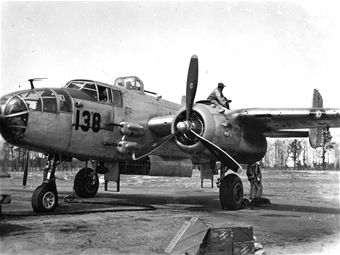 Staffing
problems plagued the medium bomber group and delayed the unit's
activation for many months beyond the projected operational date. The
washout rate among the colored aviation pilot cadets was high,
running higher than 50% at times. Until the 332nd reached it's
full
complement of pilots, most of the graduates of the program were
destined either for it or as replacements for the 99th Fighter
Squadron which was overseas for more than two years. Since the B-25
was a multiengine
airplane, pilots had to undergo additional training to qualify to fly
them while experienced single-engine pilots had to be retrained. Two
pilots were
assigned to each crew, which increased the demand for pilots. Each B-25
crew also initially included a navigator and a bombardier, although
these two skills were eventually combined. Enlisted crew chiefs,
engineers and
gunners also had to be trained. Until early 1944 when the
Army decided to proceed with plans for a colored bomber group, there
were no colored navigators. Men who had washed out of the pilot
training program were offered the opportunity to train as navigators
and most accepted and qualified with little difficulty.
Navigator training was not at Tuskegee but at Hondo, Texas.
Originally, the 477th was assigned to Selfridge
Field, an airfield near Detroit, Michigan which had also served as the
home base for the 332nd Fighter Group before it's deployment to Italy.
But by 1944 racial problems had increased dramatically within and
outside of the military and much of the unrest seemed to be centered
on Detroit,
which had a large Negro population and was also a center for the labor
movement, in which there was considerable unrest and agitation by union
leaders. Fearful that racial unrest in the city would spill over into
the bomber group, the Army decided to transfer the 477th south
to Godman Field, the airfield at Ft. Knox near Louisville, Kentucky.
Poor winter weather conditions in Michigan were given as a reason for
the
transfer.
Staffing
problems plagued the medium bomber group and delayed the unit's
activation for many months beyond the projected operational date. The
washout rate among the colored aviation pilot cadets was high,
running higher than 50% at times. Until the 332nd reached it's
full
complement of pilots, most of the graduates of the program were
destined either for it or as replacements for the 99th Fighter
Squadron which was overseas for more than two years. Since the B-25
was a multiengine
airplane, pilots had to undergo additional training to qualify to fly
them while experienced single-engine pilots had to be retrained. Two
pilots were
assigned to each crew, which increased the demand for pilots. Each B-25
crew also initially included a navigator and a bombardier, although
these two skills were eventually combined. Enlisted crew chiefs,
engineers and
gunners also had to be trained. Until early 1944 when the
Army decided to proceed with plans for a colored bomber group, there
were no colored navigators. Men who had washed out of the pilot
training program were offered the opportunity to train as navigators
and most accepted and qualified with little difficulty.
Navigator training was not at Tuskegee but at Hondo, Texas.
Originally, the 477th was assigned to Selfridge
Field, an airfield near Detroit, Michigan which had also served as the
home base for the 332nd Fighter Group before it's deployment to Italy.
But by 1944 racial problems had increased dramatically within and
outside of the military and much of the unrest seemed to be centered
on Detroit,
which had a large Negro population and was also a center for the labor
movement, in which there was considerable unrest and agitation by union
leaders. Fearful that racial unrest in the city would spill over into
the bomber group, the Army decided to transfer the 477th south
to Godman Field, the airfield at Ft. Knox near Louisville, Kentucky.
Poor winter weather conditions in Michigan were given as a reason for
the
transfer.By the spring of 1945 the group's training had progressed to the point that it was time for advanced training in preparation for movement overseas, although no definite plans had as yet been made for a new assignment. With the war in Europe nearly over, it was obvious that the group would be going to the Pacific. The group's next stop was to be Freeman Field, a B-25 training field about midway between Louisville and Indianapolis at Seymour, Indiana. Before the transfer, some of the young 477th officers got wind that the base commander at Freeman Field had set up a segregated officers club system on the base, with one club for permanently assigned base personnel and another for personnel assigned to units that were staging through the base on the way overseas. Since the new arrivals were colored, the policy automatically became racial and was a violation of US Army official policy prohibiting segregation of officers clubs based on race. A group of junior officers, nearly all navigators, decided that they would integrate the permanent party club. It was hardly a spontaneous effort but was orchestrated by certain of the more politically progressive men, particularly Lt. Coleman Young, a former Detroit resident who had been heavily involved in activist politics and union organizing before the war - and who would become a fixture in civil rights efforts in the 1960s. A group of black officers attempted to enter the permanent party club and were arrested. All but three who had used force against club personnel who barred their way were released. The three were court-martialed and convicted although the convictions were nullifed decades later.
As a result of the "Freeman Field Incident" or "Freeman Field Mutiny," the 477th's training was severely set back and the unit never became operational before the end of the war. In a move to bring stability to the group, Colonel Davis was brought back from Italy to take command of the 477th which was reorganized as a composite group and included fighter squadrons equipped with P-47s as well as medium bomber squadrons operating B-25s. Seasoned combat officers who had fought with the 99th Fighter Squadron and 332nd Fighter Group replaced white officers in command positions. When the war in Europe ended, the 332nd Fighter Group was inactivated and all colored pilots and aviation personnel, including those at Tuskegee, which also closed, were transferred into the 477th Composite Group which transferred to Lockbourne Field just outside of Columbus, Ohio. The 477th was initially equipped with B-25s and P-47s but before it was inactivated in 1949 it gave up the B-25s and the unit was redesignated as the 332nd Fighter Group once more. As the only colored unit in the Army Air Forces - and for a time in the United States Air Force - the 477th/332nd became an effective unit and won honors in fighter competition among squadrons of the new Air Force Air Defense Command.
Yet while the post-war record of the colored unit was exemplerary, it's wartime record was less than stellar. In June 1945, shortly after the end of hostilities in Europe, the Army convened a special board chaired by Lt. General Alvin Gillem to examine the wartime record of colored units. Reports were solicited from all of the wartime commanders whose commands included colored troops. General Strother, in whose command the 332nd served in Europe, was less than enthusiastic about the group's performance, as were Generals Ira Eaker, Nathan Twining and Carl Spaatz. Strother reported that the 332nd was the least effective group under his command and stated that "they were not that good."The senior Army Air Forces officers recommended that the colored pilot training program cease and that no other colored squadrons should be activated. The Gillem Board reported that colored units seemed to perform best when they worked alongside white units rather than when functioning with other colored units and recommended that the Army fully integrate but the recommendation was not followed. As it turned out, the new United States Air Force was the first of the military services to fully integrate and while integration brought new opportunties for colored officers and airmen, it caused the demise of the 332nd Fighter Group, which was disbanded and its personnel reassigned to units throughout the Air Force.
| Several authors have maintained that the "success" of the 332nd Fighter Group paved the way for integration of blacks in the military. Such a point is difficult to prove since the 332nd operated as a completely segregated unit. In fact, the record of the 99th Fighter Squadron before it became part of the 332nd illustrates that Negroes peformed better when working as an intact unit in company with other units. The 332nd was not the only US Army colored unit to serve in combat, although it is undoubtedly the best known and the glamour of aviation enhanced it's status. Dozens of colored quartermaster battalions were organized and gave excellent performance as cargo handlers and truck drivers, particularly in the RED BALL EXPRESS trucks in Europe. Two colored infantry divisions saw combat, one in Europe and one in the Pacific, and both had poor records, although their poor performance is attributed to racial prejudice on the part of their white officers and a resulting lack of leadership. A few colored battalions such as the 761st Tank Battalion saw combat. During the final months of the war in Europe when all divisions had been committed and the replacement pools had dwindled, General Eisenhower authorized the assignment of black NCO's and soldiers from rear units to line duty with white combat units. In most cases the new combat soldiers fought well and it was their experience that demonstrated that blacks and whites could fight alongside each other. |
Note - In reality, the "Tuskegee airmen" included just under 1,000 pilots as well as thousands of mechanics, officer candidates and other Negro Air Corps troops who trained at Tuskegee Army Air Field, less than half of whom served overseas with the 99th squadron or the 332nd group. Navigators did not train at Tuskegee, (except for those who washed out of pilot training) but were trained at Hondo, Texas. All told, more than 100,000 colored troops served in the Army Air Forces in various roles ranging from manual labor to combat pilots. That a large percentage of blacks were used in non-technical roles was a reflection on how they were classified based on their scores in classification tests rather than skin-color.
As the myth developed, an emphasis on alleged racism against the black pilots developed, with the most prevalent examples being the reports written by Colonel Momyer and Generals House and Spaatz. The post-war reports by Strother, Eaker and Spaatz are also attributed to racism. According to the myth, the young black pilots had been based well in the rear and had then been criticized for not shooting down enemy aircraft. Nevermind that the point of the criticism of the 99th Fighter Squadron was not that they were not shooting down enemy aircraft - their mission was primarily ground support - but that they were ineffective in the ground attack role and that they lacked combat discipline and demonstrated a lack of agression in pressing attacks on ground targets. There is no mention of the squadron's "lack of success in the air-to-air role" in Momyer's report even though, if Davis' claims are true, squadron pilots had encountered enemy aircraft on 80% of their missions. The two incidents involving air-to-air combat addressed by Momyer were the squadron's failure to attack the German bombers that were sent to attack Pantelleria but were drawn off by the fighters while the bombers went on to their targets without interference and their first mission as a squadron during which the formation disintegrated when enemy aircraft appeared. Momyer's report - as well as the reports written by House and Spaatz - are often attributed to racism. Critics played down that all three had praised the squadron for its discipline on the ground and the men's military bearing and that they considered Colonel Davis to be a superior officer. They were not as complimentary of Maj. Roberts, who was considered to be lacking in leadership ability. Momyer criticized the squadron for failing to press attacks against ground targets when ground fire was present and for turning back due to weather from a mission that the other squadrons on the mission completed. Similarily, General Dean Strother's comments that the 332nd was the least effective group in the theater were attributed to racism.
Authors writing about the so-called "Tuskegee Airmen" have pointed to the Distinguished Unit Citation the group received as evidence contradicting Strother's comments. However, at the time of his comments, the 332nd had yet to be decorated and was the only fighter group in Fifteenth Air Force that had not been. The group was also the least experienced. The orders awarding the citation are dated in October 1945 - the Gillem Board to which he submitted his report convened in June. The 99th Fighter Squadron was awarded two unit citations in addition to the one given to the 332nd but both were actually awarded to the group to which it was attached during the period cited, the 324th Fighter Group, and the 99th shared in the award rather than receiving a citation based on its own merit. The first citation was given to the 324th for its role prior to and during the invasion of Sicily while the second was for the Battle of Casino in the spring of 1944. (Whenever a unit is awarded a citation, everyone assigned or attached to the unit shares in the award, from the lowest cook or driver to the most senior officer.)
Fans of the colored airmen often comment on how the young airmen who served at Tuskegee were offended by the segregation they encountered as they moved south and the assertion is often made that they "were fighting two wars." Yet while segregation was part of the culture in the Alabama of the 1940s, the region surrounding Tuskegee was (and still is) predominently black and the Tuskegee Institute had been turning out educated young black men and women for almost 70 years by 1940. Furthermore, the majority of the men who trained at Tuskegee (and the majority of all colored soldiers) were southerners themselves and segregation was nothing new to young men from Mississippi, Alabama, Virginia, the Carolinas, Kentucky, Missouri, Arkansas, Florida, Louisiana, Maryland, Texas and Tennessee. Almost half of all of the pilots trained at Tuskegee were southerners while only about a quarter were from northern states with the rest hailing from the West Coast. Encountering segregation was no doubt shocking to young men from northern cities were racism was more subtle but it was nothing new for most of the young men and women who trained at Tuskegee. While civil rights was definitely involved in the attempted integration of the officers clubs at Freeman Field, politics received little attention at the 332nd's base in Italy where the facilities and amenities for the young black pilots and enlisted men were no different than those for white officers and enlisted men at other bases.
The real story of the men who trained at Tuskegee (and at other fields) is that they became competent airmen who were able to hold their own in combat. But they were not supermen and there is nothing in their record to support the assertion that the 332nd Fighter Group was made up of "some of the best pilots in the Army Air Forces."
When the assertions began coming out about how the 99th FS had been maligned by Momyer and that the 332nd was a superior fighter group in the 1960s, many in and out of the Air Force knew better and could have challenged the books and articles that were being written. But the 1960s were a time of turmoil, with race riots in many US cities, and the military was having problems of its own. Riots broke out on military posts and bases both in the United States and overseas and even on ships at sea. The Air Force saw riots on several of its installations and there were threats at others. At Clark Air Base, Philippines, for instance, black groups made threats to take over one of the squadron buildings of the 463rd Tactical Airlift Wing and night duty NCOs were required to wear loaded weapons and shoot to kill any black person who attempted to get into the building who did not belong there. In 1971 a riot at Travis AFB, California tied up the base for three days. Army Air Forces fighter pilot veterans were incensed by the claims that were being made regarding the black pilots' alleged accomplishments. At the time they were men in their forties and many veterans were still on active duty, some in positions of high rank. Col. Momyer, for instance, was now General Momyer and was the senior USAF officer in Vietnam.
Instead of countering the claims, the Air Force elected to let them go and to use the Tuskegee Airmen for its own purposes as role models for young black airmen and officers. When the "never lost a bomber" claims were made, the Air Force didn't contest them. After all, no records had been kept of bombers lost while being escorted by a particular group and the claim could neither be proven or disproven. As it turned out, the 332nd's pilots own mission reports revealed that the claim was false but those records were not accessible without special clearance at the time. Air Force unit records were classified for a period of thirty years and the 99th and 332nd records were classified until 1972 at the earliest. Since the claims were not contested, they were repeated by other authors who never bothered to question their validity. Books and articles published as recently as 2010 have repeated the "never lost a bomber" claim even though the Air Force publically revealed that the claim wasn't true in 2008. Dozens of Internet sites have been created memorializing the Tuskegee Airmen, and most disparage General Momyer as a racist and claim that he was reckless at Thelepte even though the official US Army Air Forces history reveals otherwise. The Wikipedia article on him is basically a hatchet job which uses only two books on the Tuskegee Airmen as its sources. One of those books was first published in 1955 and is currently in its fourth revision. The most recent revision was published by an Italian immigrant who grew up near the 332nd base in Foggia and who idolized the young black pilots and who has repeated the myths and added to them. The truth is out there however, in the articles referenced below.
Sources:
Aerial Victories of the Tuskegee Airmen
99th Pursuit Squadron
Experiment Proved
311 Missions
Gillem Report
Employment of Negro Troops
The Air Force Integrates
Target Berlin
Official Chronology of the Tuskegee Airmen
Military Racial Problems, 1960s-70s
Blacks in the Army Air Forces
US Army Air Forces in World War II, Volume II, edited by Cravens and Cate
Tuskegee Airmen Myths from the Air Force Office of Historical Research
Last Updated November 20, 2014
Click CONTENTS to return.